ChatGPT Ads could become one of the biggest disruptions in digital advertising
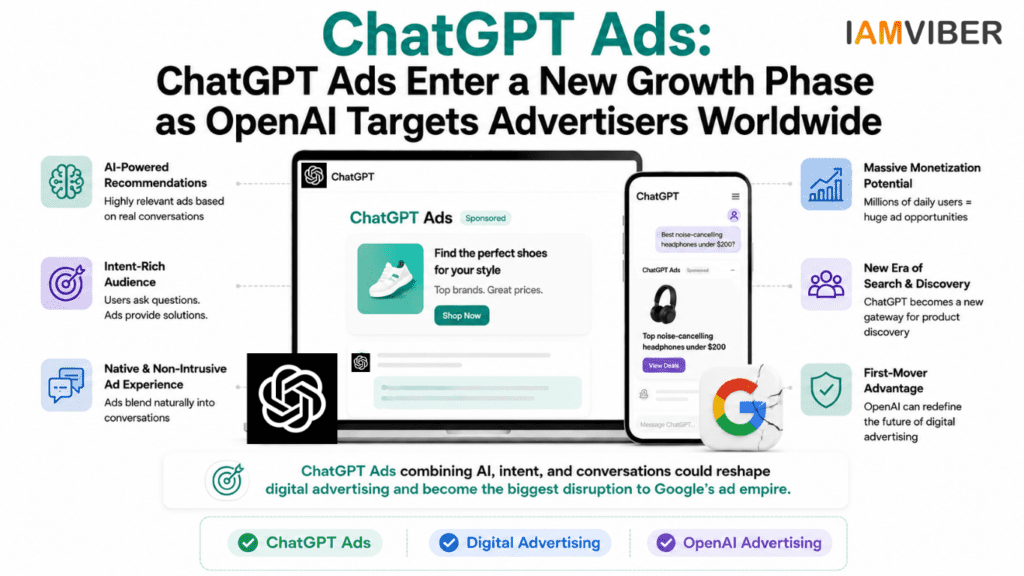
ChatGPT Ads could become one of the biggest disruptions in digital advertising since Google Search transformed online marketing.
OpenAI is no longer just an AI company building chatbots. It is now positioning itself as a serious player in the advertising industry. During the Cannes Lions 2026 advertising festival, OpenAI showcased its growing advertising business and outlined how ChatGPT Ads could become a major revenue driver in the coming years. The move signals a direct challenge to Google’s multi-billion-dollar advertising empire.
For years, Google has dominated digital advertising through Search Ads, YouTube Ads, and Display Networks. However, the rise of AI-powered search experiences is changing how users discover information online. Instead of typing keywords into Google, millions of users now ask questions directly to AI assistants like ChatGPT.
As user behavior shifts, advertising dollars may follow.
Why ChatGPT Ads Matter
The launch and expansion of ChatGPT Ads is significant because it represents a completely different advertising model from traditional search advertising.
Google’s advertising ecosystem relies heavily on keywords. Businesses bid on search terms, and ads appear alongside search results. ChatGPT Ads, however, are designed around conversations and user intent rather than isolated keywords. This allows advertisers to reach users based on the context of an ongoing interaction.
For example, a user may begin by asking for travel advice and eventually discuss hotels, flights, or travel insurance. Instead of targeting a single keyword, ChatGPT can understand the entire conversation journey and potentially present a highly relevant advertisement.
This conversational advertising model could fundamentally change how brands connect with consumers online.
OpenAI's Growing Advertising Ambitions
OpenAI’s advertising push has accelerated rapidly in 2026.
Earlier this year, the company hired former Meta advertising executive Dave Dugan to lead its global advertising initiatives. Industry observers viewed the hire as a clear sign that OpenAI was serious about building a long-term advertising business around ChatGPT.
Since then, OpenAI has expanded ad pilots across multiple markets and has reportedly been working closely with major brands and agencies.
At Cannes Lions 2026, OpenAI executives met with advertisers and marketing leaders to discuss how ChatGPT Ads can become an effective platform for brand engagement. The company also highlighted how AI-powered advertising can help brands create more personalized and useful experiences for consumers.
The message was clear: OpenAI wants a larger share of the global advertising market.
How ChatGPT Ads Differ From Google Ads
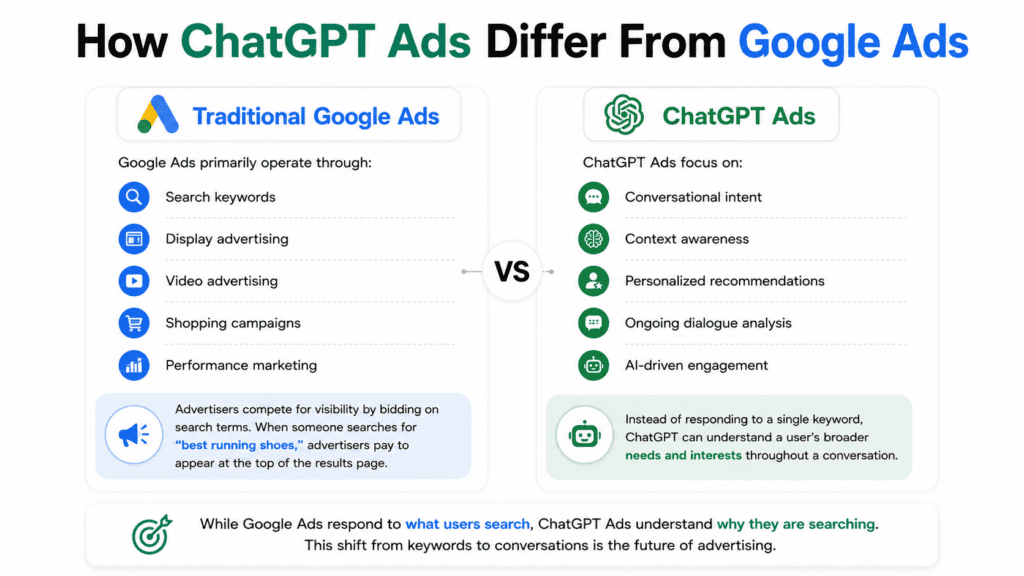
Google Ads primarily operate through:
- Search keywords
- Display advertising
- Video advertising
- Shopping campaigns
- Performance marketing
- Advertisers compete for visibility by bidding on search terms. When someone searches for "best running shoes," advertisers pay to appear at the top of the results page.
ChatGPT Ads
ChatGPT Ads focus on:
- Conversational intent
- Context awareness
- Personalized recommendations
- Ongoing dialogue analysis
- AI-driven engagement
- Instead of responding to a single keyword, ChatGPT can understand a user's broader needs and interests throughout a conversation. This creates opportunities for advertisers to reach potential customers at moments that traditional search advertising may miss.
The Financial Opportunity Behind ChatGPT Ads
The advertising industry is enormous.
Google generates hundreds of billions of dollars annually from advertising products, making ads the foundation of its business model.
For OpenAI, advertising offers an opportunity to diversify revenue beyond subscriptions and enterprise services.
OpenAI’s U.S. advertising pilot surpassed $100 million in annualized revenue within weeks of launch, demonstrating strong advertiser interest. More than 600 advertisers reportedly joined the program during its early stages.
OpenAI is also expanding self-service advertising tools and introducing new formats for brands that want to engage with ChatGPT users. As ChatGPT continues attracting millions of users worldwide, advertising could become one of OpenAI’s largest revenue streams.
Why Google Should Pay Attention
Google remains the dominant force in online advertising. However, the company faces an important challenge: Users are increasingly turning to AI assistants for answers instead of traditional search engines.
Every time a user asks ChatGPT a question instead of performing a Google search, Google potentially loses an opportunity to show search ads.
This shift may seem small today, but behavioral changes often happen gradually before accelerating rapidly.
Industry analysts believe conversational AI advertising could eventually capture a portion of the commercial intent currently flowing through Google Search.
That does not mean Google’s advertising business is in immediate danger. But it does mean competition is emerging from an entirely new direction.
The Challenges Facing ChatGPT Ads
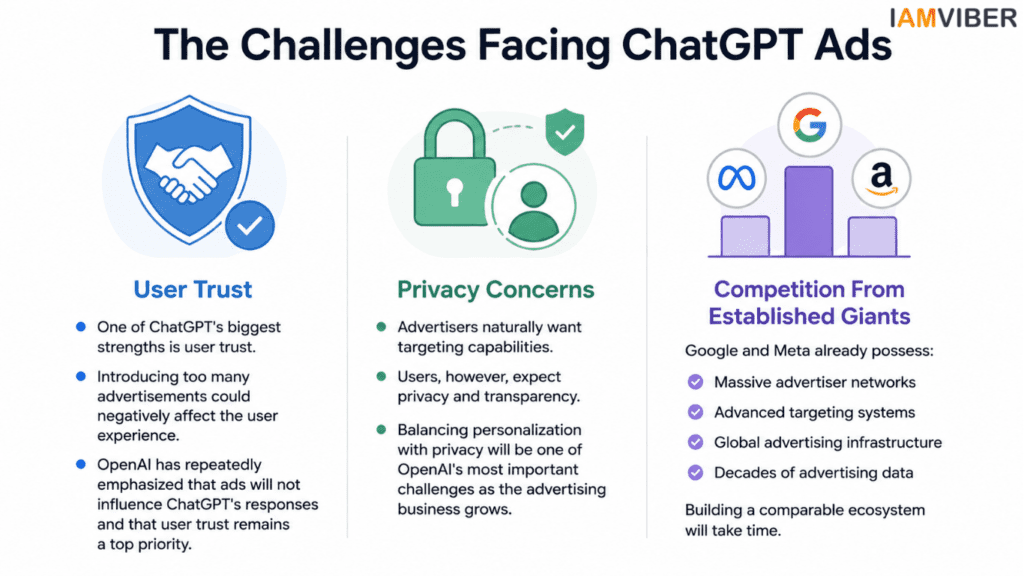
Despite the excitement, several challenges remain.
User Trust
One of ChatGPT’s biggest strengths is user trust. Introducing too many advertisements could negatively affect the user experience. OpenAI has repeatedly emphasized that ads will not influence ChatGPT’s responses and that user trust remains a top priority.
Privacy Concerns
Advertisers naturally want targeting capabilities. Users, however, expect privacy and transparency. Balancing personalization with privacy will be one of OpenAI’s most important challenges as the advertising business grows.
Competition From Established Giants
Google and Meta already possess:
- Massive advertiser networks
- Advanced targeting systems
- Global advertising infrastructure
- Decades of advertising data
- Building a comparable ecosystem will take time.
What This Means for Marketers
For marketers, ChatGPT Ads represent an entirely new channel worth monitoring closely. The future of digital advertising may not revolve around keywords alone. Instead, brands may need to optimize for:
- Conversations
- User intent
- AI-assisted discovery
- Contextual engagement
- Personalized experiences
- Companies that adapt early could gain a significant advantage as AI-driven advertising matures. Much like businesses that embraced Google Search in the early 2000s or social advertising in the 2010s, early adopters of conversational advertising may benefit from lower competition and higher engagement.
The Future of AI Advertising
The emergence of ChatGPT Ads highlights a broader transformation occurring across the internet. Search is evolving, Advertising is evolving, Consumer behavior is evolving.
OpenAI’s presence at Cannes Lions 2026 demonstrates that the company no longer sees itself solely as an AI research organization. It increasingly views itself as a platform capable of competing in some of the world’s largest technology markets.
Whether OpenAI can truly challenge Google’s advertising dominance remains uncertain. What is clear, however, is that the battle for the future of digital advertising has officially begun.
Conclusion
The rise of ChatGPT Ads marks a pivotal moment in the evolution of online advertising. By combining conversational AI with targeted advertising opportunities, OpenAI is creating a new model that could reshape how brands reach consumers.
Google still dominates the advertising landscape, but the emergence of AI-powered advertising platforms introduces a powerful new competitor.
As advertisers, marketers, and businesses adapt to this shift, one thing is becoming increasingly obvious: The next generation of advertising may not happen on a search page. It may happen inside a conversation.
FAQs
1. What Are ChatGPT Ads and How Do They Work?
ChatGPT Ads are AI-powered advertisements that appear within conversational experiences. Unlike traditional search ads, they can be delivered based on user intent, context, and ongoing conversations, creating more personalized advertising opportunities.
2. How Are ChatGPT Ads Different From Google Ads?
The biggest difference is that ChatGPT Ads focus on conversations rather than keywords. While Google Ads target specific search terms, ChatGPT Ads can understand the broader context of a user’s questions and provide more relevant recommendations.
3. Why Is OpenAI Entering the Digital Advertising Market?
OpenAI is expanding into advertising to create new revenue streams beyond subscriptions and enterprise services. The company sees ChatGPT Ads as a major business opportunity as AI-powered search and discovery continue to grow.
4. Can ChatGPT Ads Compete With Google's Advertising Business?
Although Google remains the leader in digital advertising, many experts believe ChatGPT Ads could become a serious competitor by offering conversational and intent-based advertising experiences that traditional search platforms cannot easily replicate.
5. What Does the Rise of ChatGPT Ads Mean for Marketers?
The growth of ChatGPT Ads means marketers may need to rethink their strategies. Future advertising could focus less on keywords and more on conversational intent, AI-driven recommendations, and personalized customer interactions.
Topics to follow: Current Affairs & Insights Tech Innovation GenZ entrepreneurship Collaborative Fashion GEO AI Agentic SME