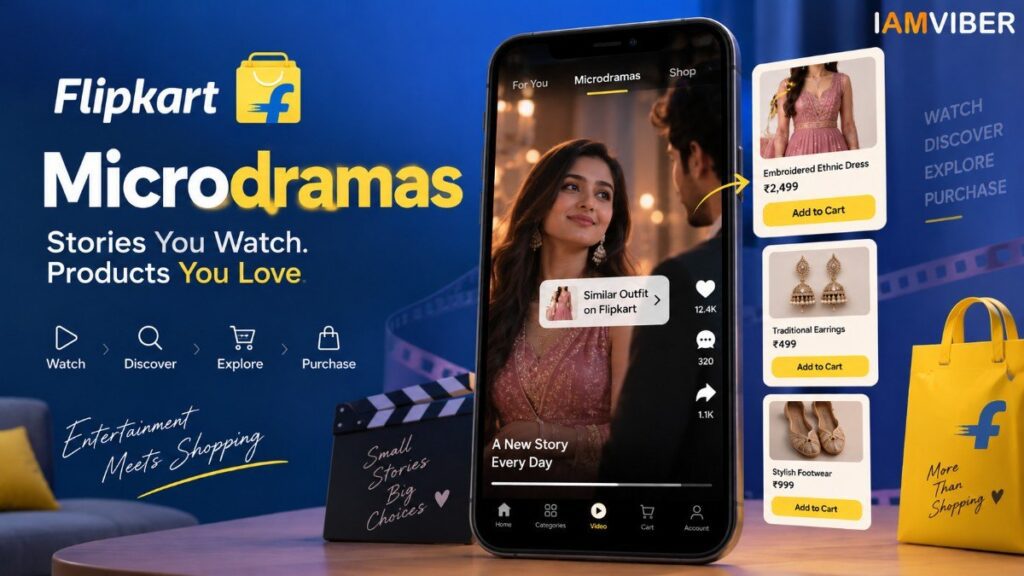
India’s e-commerce industry is entering a new phase where shopping is no longer just about searching for products. Increasingly, platforms are trying to capture consumers’ attention through entertainment, storytelling and short-form video. Against this backdrop, Flipkart microdramas could become an interesting new experiment in the company’s attempt to combine entertainment with online shopping.
Flipkart is exploring short, episodic storytelling within its shopping ecosystem, creating a potential bridge between watching content and discovering products. The idea reflects a larger shift taking place across digital commerce: consumers may increasingly discover what they want to buy while consuming entertainment rather than actively searching for it.
What Are Flipkart Microdramas?
Flipkart microdramas refer to short-form fictional video episodes designed for mobile-first audiences. Unlike traditional television shows or long web series, microdramas are generally built around quick episodes, dramatic storylines and frequent cliffhangers designed to encourage viewers to continue watching.
The format has gained attention because it matches the way younger audiences consume digital content. Short episodes can be watched during commutes, breaks or other small pockets of free time.
For Flipkart, the concept offers something beyond entertainment. Products featured within a storyline could potentially become part of the shopping journey, allowing viewers to move from content discovery to product discovery.
This is where Flipkart video commerce becomes particularly important.
Why Is Flipkart Exploring Video Commerce?
Traditional e-commerce largely follows a search-driven model. A consumer decides what they need, searches for the product, compares options and completes a purchase.
Video commerce can reverse that process.
Instead of starting with a product search, consumers can start with entertainment. A viewer may see a character wearing a particular outfit, using a smartphone, decorating a home or preparing food. The product then becomes part of the story rather than appearing as a conventional advertisement.
The potential journey becomes:
Watch → Discover → Explore → Purchase
For Flipkart microdramas, this could create a new engagement funnel where entertainment becomes the entry point for commerce.
The strategy could also increase the amount of time consumers spend within Flipkart’s ecosystem, giving the platform additional opportunities to introduce products, brands and advertising.
The Growing Popularity of Microdrama in India
The rise of microdrama in India is an important part of this trend.
Indian audiences have already embraced short-form video through platforms such as YouTube, Instagram and other digital entertainment services. Consumers are comfortable watching content in short bursts, and microdramas add another layer by introducing recurring characters and storylines.
The format is particularly suited to smartphones because episodes can be short, highly focused and designed around immediate hooks.
For an e-commerce platform, this repeated engagement could be valuable.
If viewers return regularly to follow a storyline, the platform has more opportunities to introduce products naturally. This gives Flipkart microdramas the potential to become an engagement tool as well as a commerce experiment.
How Storytelling Could Influence Shopping
One of the biggest opportunities lies in product integration.
Traditional advertising often interrupts entertainment. A commercial appears between programs, and viewers may skip it or simply ignore it.
Story-based commerce takes a different approach.
Imagine a fashion-focused microdrama where the lead character attends a wedding. The outfit, footwear, jewellery and accessories shown during the episode could potentially be connected with products available on Flipkart.
Similarly, a home-focused storyline could feature furniture, kitchen appliances or decorative products.
This creates a more contextual form of short-form video commerce.
Instead of telling consumers that they should buy something, storytelling can demonstrate how a product fits into a particular lifestyle.
What This Means for Brands
For brands, Flipkart microdramas could eventually create a new advertising opportunity.
Companies currently use search ads, display advertising, influencer marketing and social media campaigns to reach customers. Entertainment-led commerce could add another layer to this ecosystem.
Brands could potentially sponsor episodes, integrate products into storylines or collaborate with creators to develop branded entertainment.
The model could be particularly attractive for visually driven categories such as fashion, beauty, electronics, home décor and lifestyle products.
A static product image shows consumers what something looks like. A story can potentially show them how that product fits into everyday life.
That difference could make video-based product discovery more engaging.
Flipkart’s Bigger Content Strategy
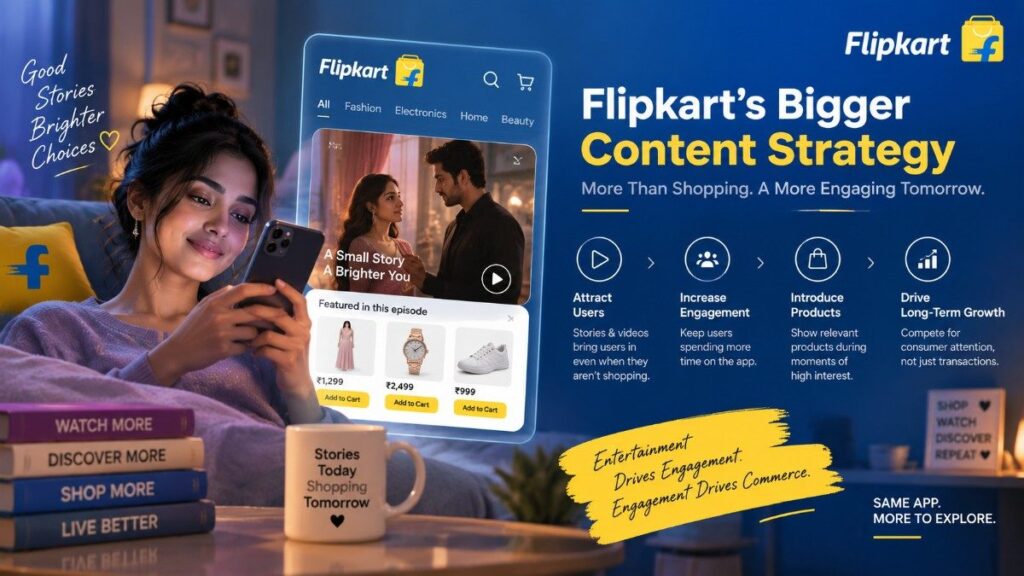
The experiment also fits into the broader Flipkart content strategy, which appears increasingly focused on consumer engagement.
Historically, an e-commerce platform primarily needed users to open its app when they wanted to shop.
The next generation of digital commerce could be different.
Platforms may want consumers to open their apps even when they have no immediate shopping requirement. Entertainment is one way to create that habit.
If users come to Flipkart for stories and videos, the platform can potentially introduce products during moments when consumers are already engaged.
This makes Flipkart microdramas strategically interesting because they could help Flipkart compete not only for shopping transactions but also for consumer attention.
The Economics Behind Microdramas
Producing original entertainment can be expensive, so Flipkart will need to determine whether the commercial opportunity justifies the investment.
There are several possible approaches.
The company could develop original microdrama series, work with established content creators or license existing shows. Each model comes with different costs and levels of control.
Original content provides greater control over storylines and product placement. Partnerships can bring existing creative expertise and audiences, while licensing can potentially reduce production responsibilities.
For Flipkart microdramas, experimentation will likely be important. The company can test different genres, episode lengths, audiences and product categories to determine what generates the strongest results.
Can Microdramas Actually Increase Sales?
The biggest question is whether viewers will actually purchase products after watching these stories.
High viewing numbers alone are not enough.
Flipkart would need to examine metrics such as product clicks, conversion rates, average order value, repeat visits and revenue generated from content-driven traffic.
The commercial model becomes much more compelling if a viewer watches an episode, interacts with a featured product and ultimately completes a purchase.
That would demonstrate that Flipkart microdramas are not simply an entertainment feature but a measurable commerce channel.
The platform could also use behavioural data to understand which types of stories generate the strongest product interest.
A New Battle for Consumer Attention
The move reflects a larger convergence between entertainment and commerce.
Social media companies are increasingly incorporating shopping features. Streaming platforms are expanding their advertising capabilities. E-commerce companies are experimenting with video and entertainment.
The traditional boundaries between these industries are becoming less clear.
For Flipkart, Flipkart microdramas could represent an attempt to build a more engaging digital ecosystem around its existing commerce infrastructure.
The company already has a large product catalogue and shopping audience. Adding entertainment could potentially give users another reason to stay inside the platform.
What Could Happen Next?
The success of Flipkart microdramas will ultimately depend on execution.
If the stories feel like advertisements disguised as entertainment, consumers may quickly lose interest. But if the content is genuinely engaging and shopping integrations feel natural, the model could have significant potential.
The opportunity is particularly relevant in India, where smartphone adoption and short-form video consumption have created a large audience for mobile-first entertainment.
If Flipkart manages to combine compelling storytelling with seamless product discovery, its experiment could influence how other e-commerce platforms approach content.
The Future of Entertainment-Led Commerce
The larger significance of Flipkart microdramas goes beyond one company or one content format.
It points toward a possible future where shopping begins with discovery rather than search.
A consumer may not open an app because they want a particular product. Instead, they may open it to watch a story. During that story, they discover something interesting. A product catches their attention, and within a few taps, they can explore or purchase it.
That is the potential of Flipkart video commerce.
As microdrama in India continues to develop, entertainment could become an increasingly important part of digital retail. At the same time, short-form video commerce may provide brands with new ways to demonstrate products and reach consumers.
For Flipkart, Flipkart microdramas could therefore become more than a content experiment. They could be a test of whether an e-commerce platform can turn entertainment into a shopping habit.
The Flipkart content strategy ultimately reflects a simple idea: the future customer journey may not always begin with a search query.
Sometimes, it may begin with a story.
And if that story can seamlessly lead to a product discovery and purchase, entertainment could become one of the next major growth engines for Indian e-commerce.
Frequently Asked Questions
1. What are Flipkart microdramas?
Flipkart microdramas are short, episodic video stories designed to combine entertainment with product discovery and shopping.
2. Why is Flipkart microdramas becoming a new video commerce trend?
Flipkart microdramas can help the platform combine storytelling, audience engagement and product discovery within the shopping experience.
3. How could Flipkart microdramas change online shopping?
Flipkart microdramas could shift shopping from traditional search-based discovery toward entertainment-led product discovery.
4. Can Flipkart microdramas help brands reach more customers?
Yes, Flipkart microdramas could give brands opportunities to showcase products naturally through characters, stories and contextual product placements.
5. How do Flipkart microdramas work with video commerce?
Flipkart microdramas can connect video content with products, allowing viewers to discover items featured or relevant to a particular storyline.
6. Why is Flipkart investing in microdrama content?
Flipkart microdramas could increase user engagement while creating new opportunities for advertising, branded content and commerce.
7. Are Flipkart microdramas available on the Flipkart app?
Flipkart microdramas are part of Flipkart’s emerging experiment with short-form entertainment and video-led commerce, with availability and formats subject to change.
8. What is the future of Flipkart microdramas in India?
The future of Flipkart microdramas will depend on viewer engagement, content quality and whether entertainment-driven product discovery can generate measurable sales.
Topics to follow on IAMVIEBR : Current Affairs & Insights Tech Innovation GenZ entrepreneurship Collaborative Fashion GEO SME