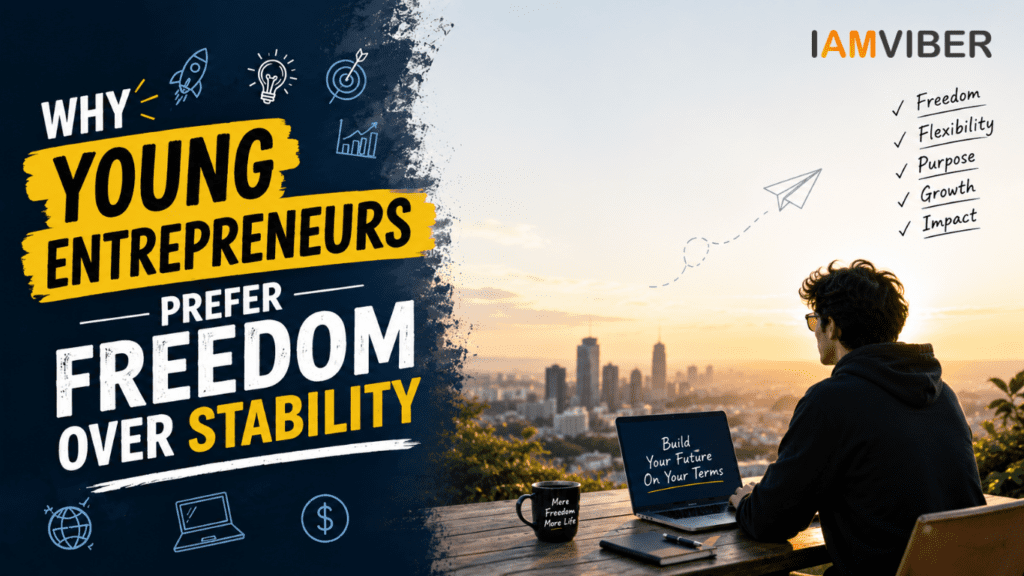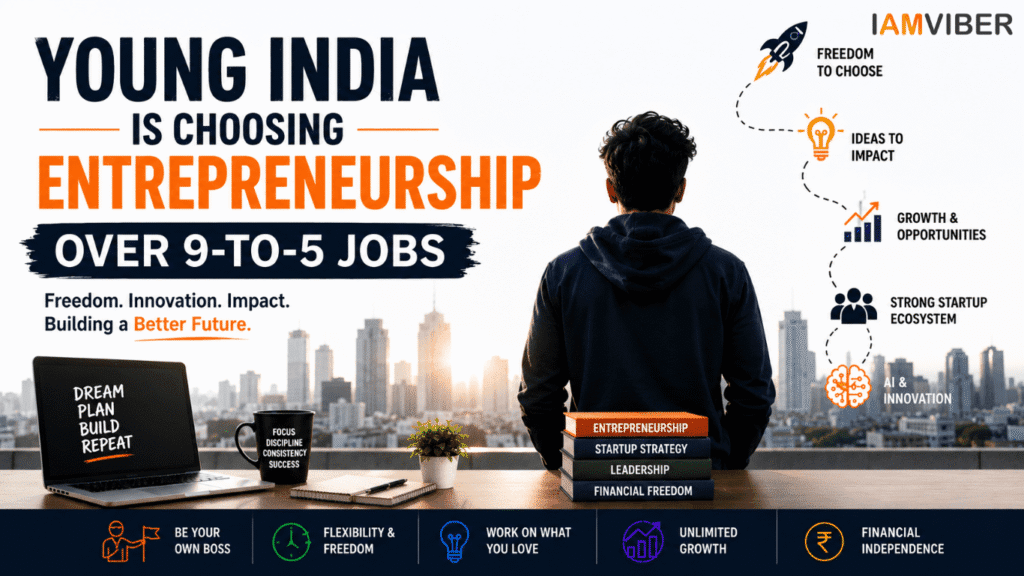
The entrepreneurial wave sweeping across the country
For decades, success in India followed a predictable formula: earn a good degree, secure a stable job, climb the corporate ladder, and eventually achieve financial security. It was a path that worked well for previous generations, especially at a time when job opportunities were limited and stability was considered the ultimate goal.
However, something has changed.
Today’s generation looks at work differently. Across India, more young people are choosing entrepreneurship, freelancing, startups, creator businesses, and independent ventures over conventional 9-to-5 careers. While jobs still remain important, they are no longer the only definition of success.
Young India isn’t rejecting work—it is redefining what meaningful work looks like. The entrepreneurial wave sweeping across the country is being driven by a generation that values freedom, ownership, creativity, and impact more than ever before.
The Desire for Freedom Is Stronger Than the Desire for Security
Freedom Over Stability: The New Career Mindset
One of the biggest reasons young Indians are turning towards entrepreneurship is their desire for freedom.
Traditional jobs often come with fixed schedules, reporting structures, office politics, and limited flexibility. While many people thrive in such environments, a growing number of young professionals feel constrained by them.
The modern workforce wants more control over how they spend their time and where they direct their energy. They want the freedom to work on projects they care about, experiment with ideas, and create something of their own.experiment with ideas, and create something of their own.
Entrepreneurship offers that opportunity. Instead of building someone else’s vision, entrepreneurs get the chance to build their own. They make decisions, set goals, and shape the future of their businesses. For many young people, that sense of ownership is far more attractive than the predictability of a monthly paycheck.
Social Media Has Changed Career Aspirations
A major factor behind India’s entrepreneurial boom is the influence of social media and the internet.
Ten years ago, most young people were exposed primarily to traditional career role models such as engineers, doctors, government officers, and corporate executives. Today, they regularly see startup founders, creators, agency owners, consultants, and digital entrepreneurs sharing their journeys online.
Platforms like Instagram, YouTube, LinkedIn, and X have made entrepreneurship visible and accessible. Every day, young Indians watch people their age launch businesses, build audiences, generate revenue, and create impact. These stories make entrepreneurship feel real rather than distant.
The internet has shown an entire generation that success doesn’t always require following conventional paths. As a result, many young professionals are beginning to ask themselves a different question—not “Which company should I work for?” but “What can I build?”
Technology Has Reduced the Barriers to Starting a Business
Perhaps the most significant reason behind the rise of entrepreneurship is technology. Starting a business once required large investments, office space, employees, and extensive infrastructure. Today, a laptop and internet connection are often enough to get started.
A young entrepreneur can launch an online store, start a marketing agency, build software, create digital products, offer consulting services, or run an AI-powered business from almost anywhere.
Modern tools have dramatically reduced startup costs. Cloud computing, AI, automation software, payment gateways, no-code platforms, and digital marketing tools allow small teams to compete with much larger organizations. This accessibility has encouraged more young Indians to experiment with entrepreneurship because the financial risks are lower than they were in the past.
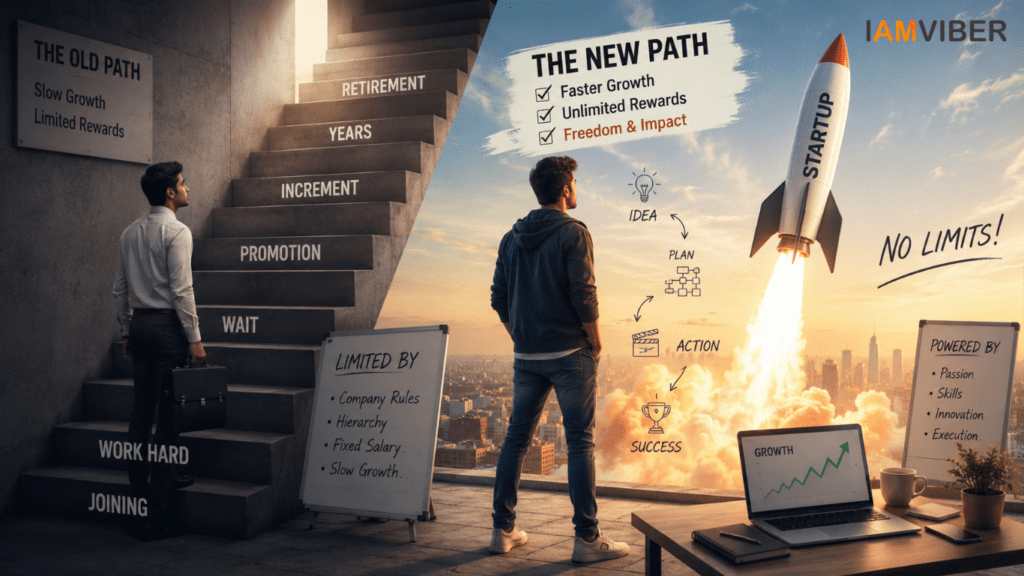
Another reason many young Indians are exploring entrepreneurship is the desire for faster personal and financial growth. In traditional careers, progression often follows a structured path. Promotions, salary increments, and leadership opportunities can take years to achieve.
Entrepreneurship offers a different model.The rewards are directly connected to effort, innovation, and execution. While there are no guarantees, there is also no fixed ceiling.
The Rise of the Creator and Side-Hustle Economy
One of the most interesting shifts in recent years has been the rise of side hustles and the creator economy. Many young Indians are no longer dependent on a single source of income. They are building personal brands, creating content, offering freelance services, selling digital products, or managing online communities alongside their primary work.
What starts as a side project often grows into a full-time business. The success of content creators, consultants, freelancers, and digital entrepreneurs has demonstrated that entrepreneurship doesn’t always require huge investments or large teams. Sometimes it begins with a skill, a smartphone, and a willingness to share knowledge with others. This has made entrepreneurship more approachable and less intimidating for first-time founders.
Purpose Matters More Than Ever
The younger generation is increasingly driven by purpose. Many professionals feel dissatisfied when their work lacks meaning or impact. They want to contribute to something larger than themselves and solve problems that matter.
Entrepreneurship provides that opportunity. Whether it’s improving education, transforming healthcare, simplifying business processes, promoting sustainability, or developing innovative technology, entrepreneurs have the freedom to focus on challenges they genuinely care about. This sense of purpose often becomes a powerful motivator. Rather than simply completing assigned tasks, entrepreneurs are building solutions that can influence industries, communities, and even entire markets.
AI and Innovation Are Creating New Opportunities
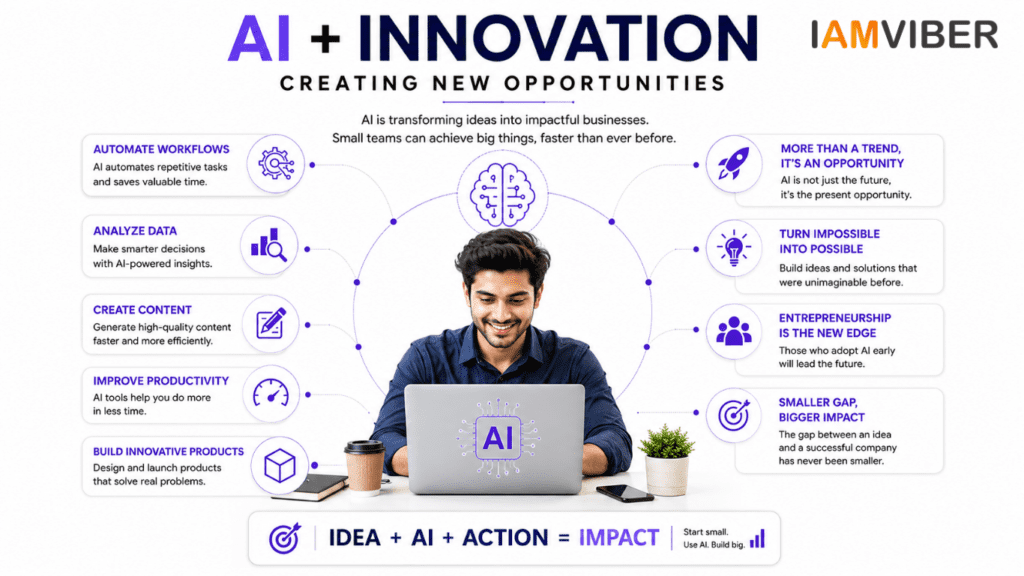
Artificial Intelligence is accelerating entrepreneurship by making it easier for small teams to achieve what once required large organizations. From automating workflows and creating content to improving productivity and building innovative products, AI is helping entrepreneurs launch and scale businesses faster than ever before.
For young Indians, AI is more than a technology trend—it’s an opportunity. Those who embrace emerging technologies can turn ideas into successful businesses with fewer resources, making entrepreneurship a more attractive path than traditional employment. As technology continues to evolve, building a company has never been more accessible.
A Stronger Startup Ecosystem Is Encouraging Risk-Taking
India’s startup ecosystem has matured significantly over the past decade. Access to funding, mentorship, incubation programs, networking communities, and educational resources has improved dramatically. Aspiring founders now have access to guidance and support systems that simply did not exist for previous generations.
More importantly, India has produced numerous startup success stories that inspire confidence among young entrepreneurs. When people see founders building successful companies from small beginnings, entrepreneurship starts to feel achievable rather than impossible.
Success creates belief, and belief encourages action. This positive cycle is helping entrepreneurship become a mainstream career choice.
The Future Belongs to Builders
The most important reason Young India is becoming entrepreneurial may simply be a shift in mindset. The younger generation has grown up in a world where opportunities are no longer limited by geography or traditional gatekeepers. A person sitting in a small town can build a global business, acquire international clients, and create products used across continents.
This generation has access to knowledge, technology, and networks that previous generations could only dream of. As a result, many young people no longer want to spend their entire careers following established systems.
They want to create new ones. They want to build brands instead of only working for them. They want to launch products instead of only selling them. They want to create opportunities instead of waiting for them.
Conclusion
Young India is choosing entrepreneurship because the definition of success is evolving. While traditional careers continue to play an important role, many young professionals are seeking something more—freedom, ownership, creativity, flexibility, and purpose.
Technology has lowered barriers, social media has expanded horizons, AI has created new possibilities, and the startup ecosystem has made entrepreneurship more accessible than ever before. The result is a generation that is increasingly focused on building rather than simply working.
This shift is not just transforming individual careers; it is reshaping India’s economic future. As more young people choose innovation over convention and creation over comfort, India is emerging as one of the world’s most dynamic entrepreneurial nations.
The question for today’s youth is no longer, “Which job should I take?” It is increasingly becoming, “What can I build next?”