NVIDIA officially introduced RTX Spark
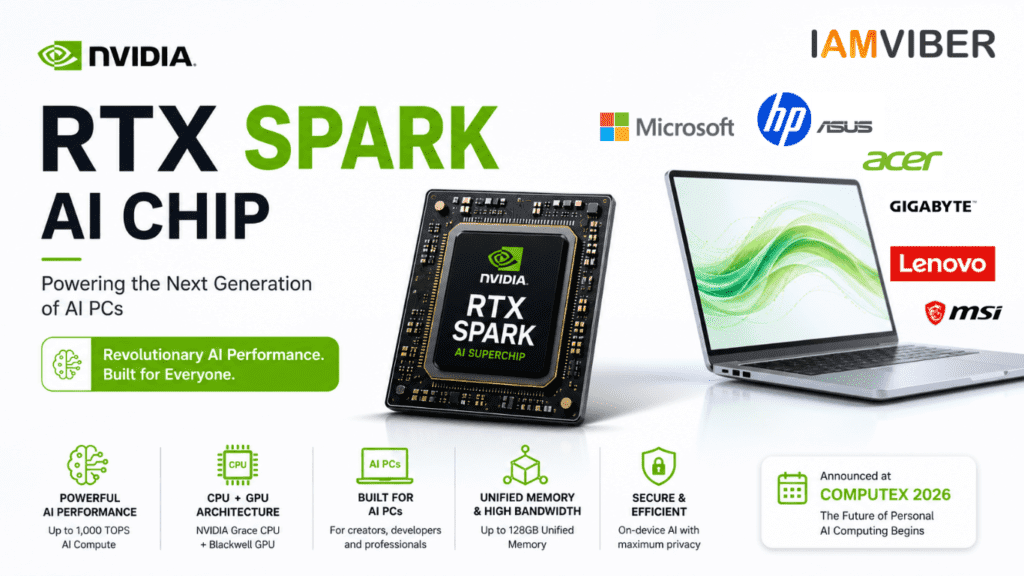
The AI revolution is entering a new phase, and NVIDIA is leading the charge once again. During Computex 2026 in Taipei, NVIDIA officially introduced RTX Spark, a next-generation AI superchip designed specifically for Windows laptops and desktop PCs. The announcement marks one of the company’s biggest moves beyond graphics cards and into the future of AI-powered personal computing.
With AI rapidly becoming part of daily workflows, NVIDIA believes traditional PCs are no longer enough. RTX Spark aims to transform computers into intelligent systems capable of running AI agents, generating content, processing large language models, and handling advanced creative tasks directly on the device.
NVIDIA RTX Spark is NVIDIA’s newly announced AI-focused processor platform built for the next generation of Windows computers. Unlike traditional processors that separate CPU and GPU functions, RTX Spark combines NVIDIA’s Grace CPU architecture with Blackwell GPU technology into a single high-performance AI superchip.
According to NVIDIA CEO Jensen Huang, the goal is to reinvent personal computers for the age of AI agents. Instead of opening applications manually, users will increasingly interact with intelligent assistants that can perform tasks, automate workflows, and respond using natural language.
When Was RTX Spark Announced?
NVIDIA officially unveiled RTX Spark on June 1, 2026, during the Computex 2026 keynote event held in Taipei, Taiwan. The announcement quickly became one of the most talked-about developments in the technology industry because it represents NVIDIA’s direct entry into the Windows PC processor market.
The launch also strengthens NVIDIA’s collaboration with Microsoft and MediaTek as the companies work together to build AI-first Windows devices.
Key Specifications of NVIDIA RTX Spark
RTX Spark introduces impressive hardware capabilities designed specifically for AI workloads.
Blackwell GPU Architecture
The chip includes a powerful NVIDIA Blackwell RTX GPU featuring 6,144 CUDA cores and fifth-generation Tensor Cores optimized for AI processing.
Grace CPU Integration
RTX Spark combines the GPU with a 20-core NVIDIA Grace CPU using NVLink-C2C technology for faster communication and improved efficiency.
Massive AI Performance
NVIDIA claims RTX Spark can deliver up to 1 petaflop of AI computing power, making it one of the most powerful AI chips ever designed for consumer computers.
Up to 128GB Unified Memory
The platform supports up to 128GB of unified memory, enabling local execution of large AI models without depending entirely on cloud servers.
Why RTX Spark Is Different from Traditional PC Chips
For decades, personal computers relied on launching apps and manually completing tasks. NVIDIA believes the next generation of computing will revolve around AI agents that understand instructions and execute workflows automatically.
RTX Spark is built specifically for this vision. Users will be able to :
- Run AI assistants locally
- Generate videos and images faster
- Execute large language models on-device
- Automate repetitive workflows
- Improve privacy by reducing cloud dependency
- This shift could fundamentally change how people interact with computers over the coming years.
Major Brands Supporting RTX Spark
Several leading PC manufacturers have already announced plans to release RTX Spark-powered devices.
How RTX Spark Could Impact the AI Industry
The release of RTX Spark is important because it pushes AI away from massive cloud data centers and closer to everyday users.
Today, many AI applications depend heavily on internet-connected servers. RTX Spark aims to bring those capabilities directly onto personal devices, offering better speed, security, and privacy. Industry experts believe this move could intensify competition between NVIDIA, Intel, AMD, Apple, and Qualcomm as companies race to dominate the AI PC market.
NVIDIA’s Vision for AI-Powered Computers
During the announcement, Jensen Huang described RTX Spark as the beginning of a new computing era. NVIDIA envisions PCs becoming intelligent teammates rather than simple tools. Instead of opening applications and manually performing tasks, users may simply describe what they want, while AI agents handle the work automatically.
This concept aligns with the growing trend of agentic AI, where software can reason, plan, and execute actions with minimal human intervention.
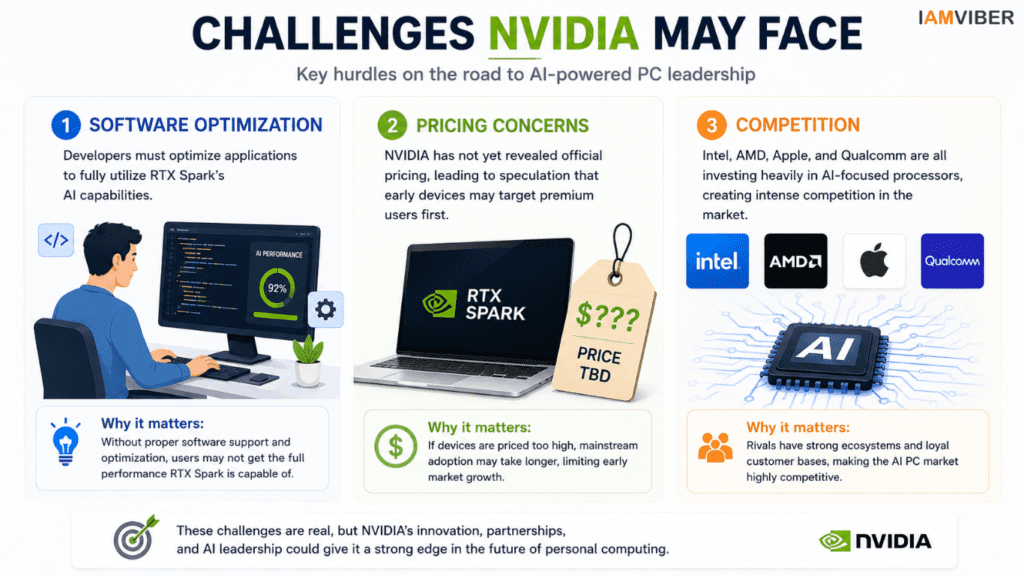
Challenges NVIDIA May Face
While RTX Spark has generated significant excitement, several challenges remain.
Final Thoughts
RTX Spark could become one of the most important PC innovations of the decade. By combining advanced AI processing, powerful graphics performance, and on-device intelligence, NVIDIA is attempting to redefine what personal computers can do.
If NVIDIA delivers on its promises, RTX Spark-powered devices may usher in a future where AI assistants, local language models, creative automation, and intelligent workflows become standard features of everyday computing.
As the first RTX Spark laptops and desktops launch later in 2026, the technology industry will be watching closely to see whether NVIDIA can successfully reshape the future of the PC.