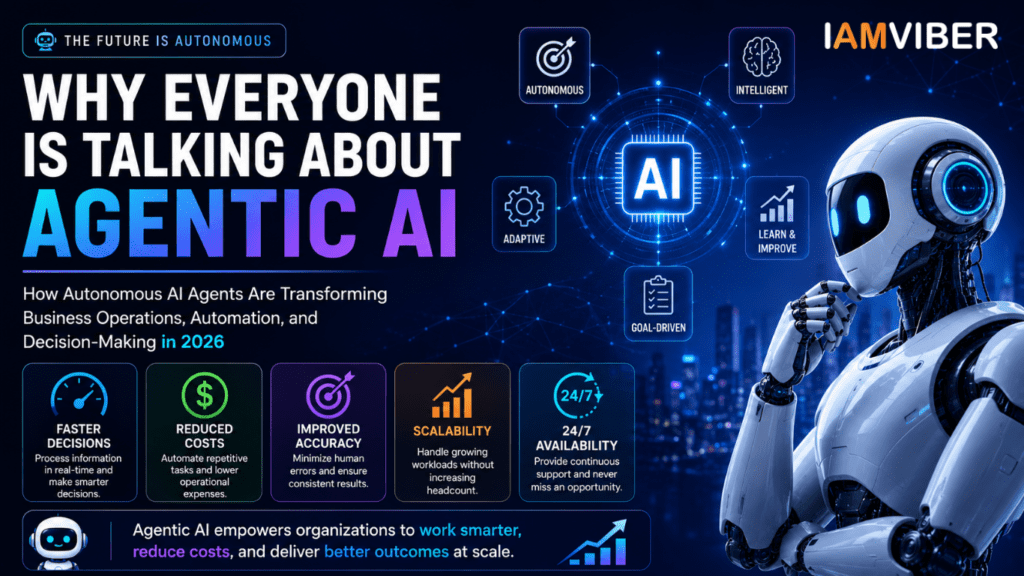
Agentic AI Explained: Why It’s the Biggest AI Trend of 2026
Artificial Intelligence is evolving at a remarkable pace, and one term that has rapidly gained attention across the technology industry is Agentic AI. From startups and enterprises to software developers and business leaders, everyone seems to be discussing how Agentic AI could transform the future of work, automation, and decision-making.
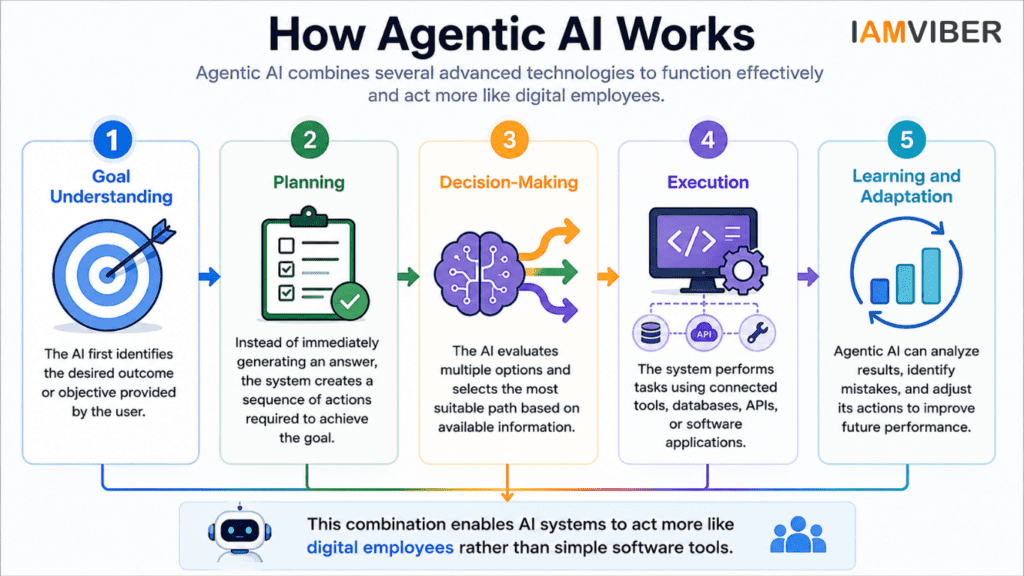
Unlike traditional AI systems that simply respond to prompts, Next-Generation AI introduces a new level of autonomy. These systems can plan, reason, make decisions, and execute tasks with minimal human intervention. As organizations seek smarter ways to improve efficiency and productivity, Agentic AI is emerging as one of the most important innovations in the AI landscape.
Agentic AI refers to artificial intelligence systems that can act as independent agents capable of performing tasks, making decisions, and achieving goals without requiring constant human guidance.
Traditional AI tools generally wait for instructions before generating a response. Agentic AI goes a step further by analyzing objectives, creating plans, selecting actions, and adapting to changing. For example:
- A chatbot answers questions when prompted
- An AI-Powered Systems system can manage customer support tickets, prioritize requests, generate responses, and escalate issues when necessary
- This ability to operate autonomously is what makes Agentic AI different from previous generations of AI technology.
Why Next-Generation AI Is Becoming So Popular
Several factors are driving the rapid rise of Agentic AI across industries.
Increased Productivity
Businesses are constantly looking for ways to save time and reduce operational costs. Agentic AI can automate multi-step workflows that previously required human involvement. Tasks such as data analysis, report generation, customer service management, and scheduling can now be handled more efficiently.
Better Automation
Traditional automation follows fixed rules. Agentic AI introduces flexibility by adapting to changing situations and making intelligent decisions. This makes automation more useful in real-world business environments where conditions frequently change.
Advancements in Large Language Models
The success of modern AI models has significantly improved reasoning, communication, and problem-solving capabilities. These advancements provide the foundation needed for building intelligent AI agents that can perform increasingly complex tasks.
Growing Demand for Digital Transformation
Organizations worldwide are investing heavily in digital transformation initiatives. Agentic AI helps businesses automate operations while improving speed and accuracy. As competition increases, companies are turning to AI-powered solutions to gain an advantage.
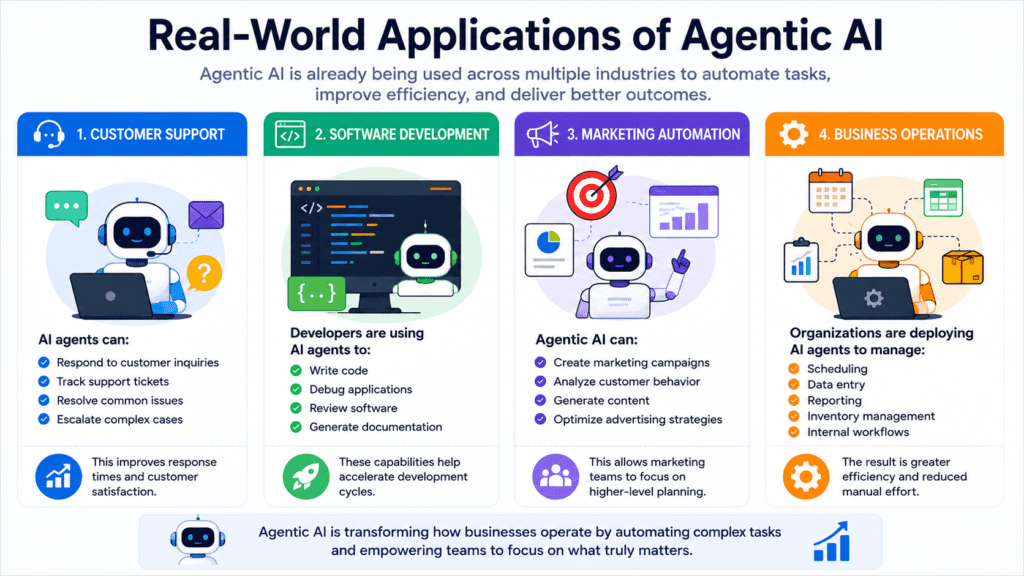
Agentic AI vs Traditional AI
Understanding the difference between Agentic AI and traditional AI is essential.
| Traditional AI | Agentic AI |
|---|---|
| Responds to prompts | Acts independently |
| Performs single tasks | Handles multi-step workflows |
| Requires continuous instructions | Works toward goals autonomously |
| Limited decision-making | Advanced reasoning capabilities |
| Reactive behavior | Proactive behavior |
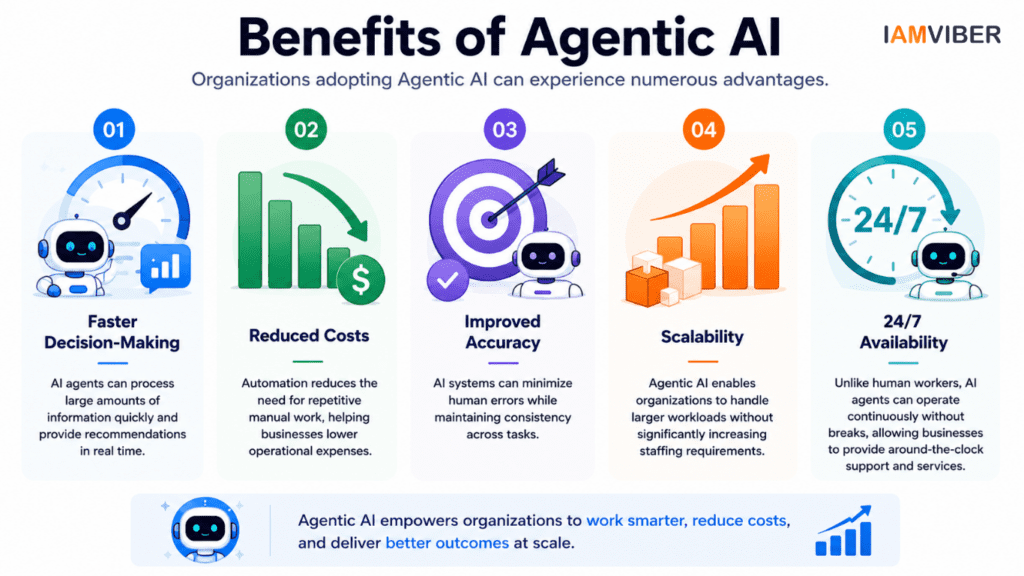
Benefits of Agentic AI
Organizations adopting Agentic AI can experience numerous advantages.
Challenges and Risks of Agentic AI
Despite its potential, Agentic AI also presents important challenges.
Security Concerns
Autonomous systems often access sensitive data and critical business systems. Proper safeguards are essential.
Ethical Considerations
Organizations must ensure AI decisions remain transparent, fair, and aligned with human values.
Reliability Issues
AI systems can occasionally make incorrect decisions, especially when operating with incomplete information.
Regulatory Compliance
Governments worldwide are developing new regulations around AI usage, privacy, and accountability. Businesses adopting Agentic AI must stay compliant with evolving legal requirements.
The Future of Agentic AI
Industry experts believe Agentic AI will play a major role in the next phase of artificial intelligence development. Future AI agents may be capable of:
- Managing entire business workflows
- Conducting advanced research
- Coordinating teams of AI assistants
- Handling complex decision-making processes
- Collaborating seamlessly with human workers
- As technology continues to improve, Agentic AI is expected to become an essential component of modern business operations.
Why Businesses Should Pay Attention
Companies that understand and adopt Agentic AI early may gain significant competitive advantages. The technology offers opportunities to:
- Increase productivity
- Reduce costs
- Improve customer experiences
- Accelerate innovation
- Streamline operations
- Organizations that delay adoption risk falling behind competitors that leverage AI-driven automation more effectively.
Conclusion
Agentic AI represents a major step forward in the evolution of artificial intelligence. Unlike traditional AI systems that simply respond to instructions, Agentic AI can plan, reason, make decisions, and execute tasks autonomously.
Its ability to automate complex workflows, improve productivity, and support business growth is why technology leaders, startups, and enterprises are paying close attention. While challenges related to security, ethics, and governance remain, the potential benefits are too significant to ignore.
As businesses continue their digital transformation journeys, Agentic AI is poised to become one of the most influential technologies of the coming decade. The growing excitement surrounding Agentic AI is not just another trend—it is a glimpse into the future of intelligent automation and autonomous decision-making.