
India’s Placement Problem Is a Skills Translation Gap
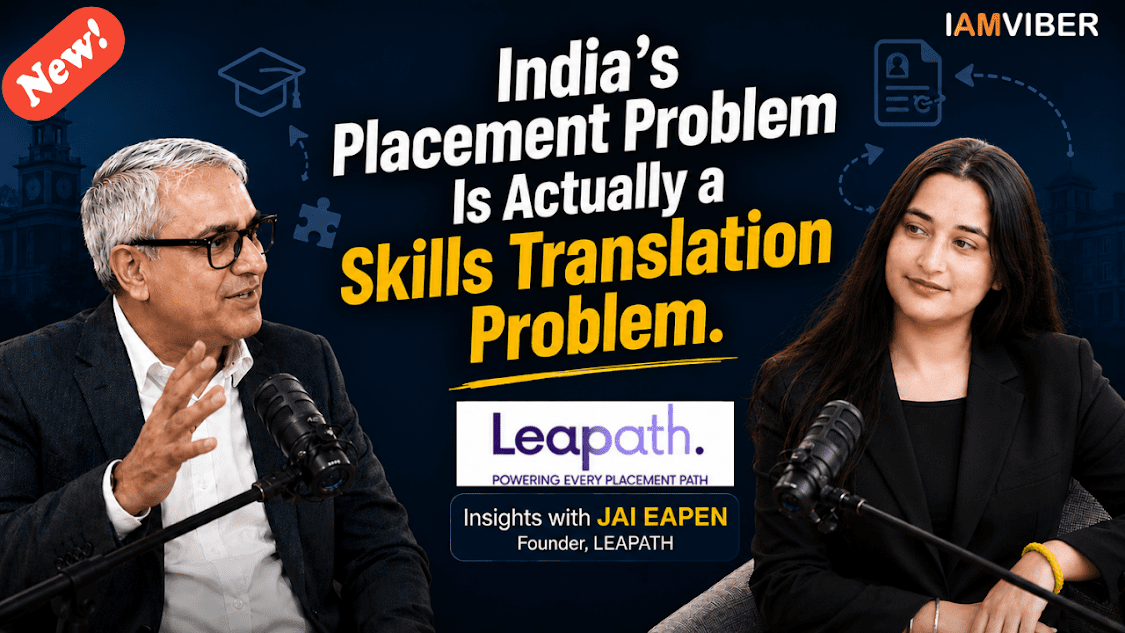
Every year, millions of students graduate from colleges across India, yet employers continue to report a shortage of job-ready talent. This raises an important question: Is India facing a placement problem, or is it actually a skills translation problem? In the latest episode of IAMVIBER, we explored this pressing issue with Jai Eapen, Founder of Leapath and former Co-Founder & Chief Growth Officer at Certify Me, who has spent years working at the intersection of education, employability, and technology.
During the conversation, Jai explained that the challenge isn’t that students lack talent—it is that many struggle to present their skills in a way that matches industry expectations. Recruiters today are looking beyond degrees and marksheets. They want candidates who can demonstrate their abilities through real projects, internships, portfolios, problem-solving, and practical experience.
The discussion also highlighted how Artificial Intelligence is reshaping the hiring landscape. As AI automates repetitive tasks, companies increasingly value skills like critical thinking, creativity, adaptability, communication, and collaboration. Jai emphasized that students who learn to work alongside AI and continuously upgrade their skills will have a significant advantage in the future job market.
Another key takeaway was the growing importance of proof of work over paper qualifications. A strong portfolio, hands-on experience, certifications backed by execution, and a willingness to keep learning can often create a bigger impact than a traditional resume. For students from any college, building real-world experience has become one of the most effective ways to stand out.
Jai also shared practical advice for students preparing for placements. Instead of waiting until the final semester, students should start building industry-relevant skills early, participate in internships, contribute to meaningful projects, network with professionals, and develop both technical and soft skills. These habits not only improve employability but also build long-term career confidence.
The biggest message from this conversation was simple yet powerful: a degree may help you get an interview, but practical skills, execution, and continuous learning are what build successful careers. Whether you’re a student, educator, recruiter, or founder, this episode offers actionable insights into closing the gap between education and employment and preparing for the future of work.