Intel & Apple Partnership fuels Intel stock surge
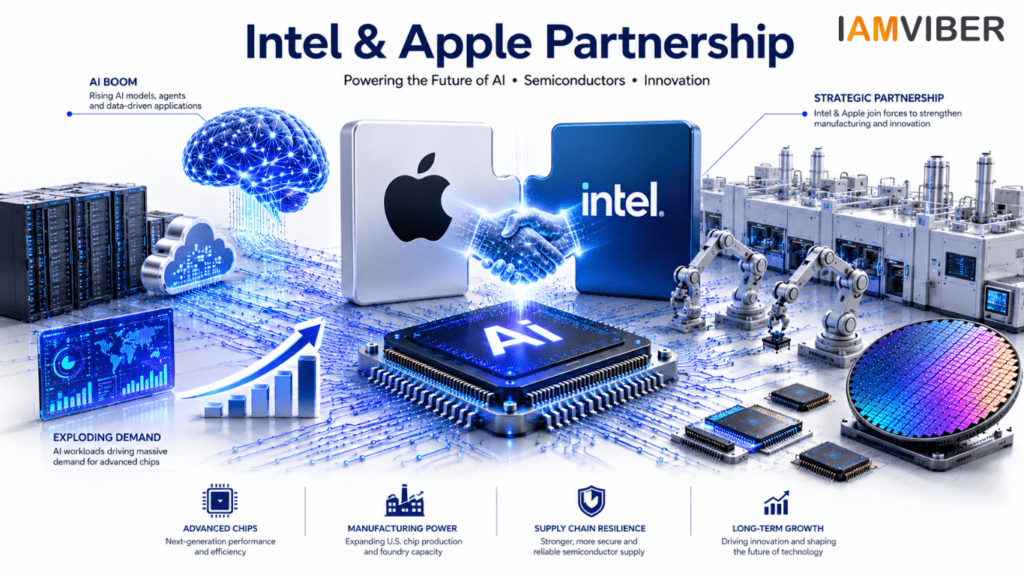
Intel shares surged nearly 11% after reports suggested that Apple could collaborate with the chip giant on semiconductor development and manufacturing initiatives in the United States. The news quickly captured the attention of investors, technology leaders, and semiconductor analysts, who view the potential partnership as one of the most significant developments in the chip industry this year.
The sharp rise in Intel stock reflects growing confidence in the company’s efforts to rebuild its manufacturing leadership and expand its foundry business. At the same time, the development highlights the increasing importance of semiconductor manufacturing as artificial intelligence (AI), cloud computing, and next-generation consumer technologies drive unprecedented demand for advanced chips.
While details remain limited, the possibility of an Apple-Intel collaboration has already sparked discussions about the future of chip manufacturing, AI infrastructure, and supply chain diversification.
Investors reacted positively to the announcement between Intel & Apple Partnership, sending Intel stock up by approximately 11% during trading. The market rally reflects growing confidence in Intel’s efforts to transform itself into a leading contract chip manufacturer through Intel Foundry. For years, the company has been investing billions of dollars into advanced semiconductor manufacturing facilities and next-generation chip technologies.
Apple’s reported involvement is being viewed as a major endorsement of Intel’s manufacturing capabilities. Industry experts note that Apple is known for maintaining extremely high standards for chip performance, efficiency, and production quality. Any manufacturing relationship involving Apple carries substantial credibility within the technology sector. As a result, investors see the potential partnership as a sign that Intel’s turnaround strategy may finally be gaining traction.
Why Apple's Partnership With Intel Matters
Apple designs some of the most advanced processors in the world.
Its custom silicon powers the iPhone, MacBook, iPad, Apple Watch, and other products across its ecosystem. The success of Apple’s M-series chips has established the company as one of the industry’s leading semiconductor designers.
Historically, Apple has relied heavily on Taiwan Semiconductor Manufacturing Company (TSMC) for chip production. However, growing concerns around supply chain resilience, geopolitical risks, and increasing semiconductor demand have encouraged major technology companies to diversify manufacturing partnerships.
By working with Intel, Apple could gain access to additional manufacturing capacity while supporting efforts to expand semiconductor production within the United States. The partnership could also help Apple reduce reliance on overseas manufacturing and strengthen long-term supply chain stability.
Intel Foundry Could Be the Biggest Winner
At the center of the announcement of Intel & Apple, Intel Foundry, the company’s ambitious effort to compete directly with global manufacturing leaders such as TSMC and Samsung.
Intel’s foundry business aims to manufacture chips for external customers rather than solely producing processors for its own products. This strategy represents one of the biggest transformations in Intel’s history.
The company has invested heavily in advanced manufacturing facilities, research, and process technologies to attract leading chip designers. Securing Apple as a foundry customer would be a major milestone. Not only would it provide a significant revenue opportunity, but it could also encourage other technology companies to consider Intel as a manufacturing partner. Many analysts believe that attracting a customer of Apple’s scale would instantly strengthen Intel’s credibility within the foundry market.
AI Boom Is Driving Semiconductor Demand
The announcement arrives during a period of explosive growth in artificial intelligence. The rise of generative AI, AI agents, machine learning models, and data-intensive applications has significantly increased global demand for advanced semiconductors.
Companies like NVIDIA, AMD, Google, Microsoft, and OpenAI are investing billions into AI infrastructure, creating intense competition for semiconductor manufacturing capacity. As AI workloads become more complex, technology companies require increasingly powerful and efficient chips.
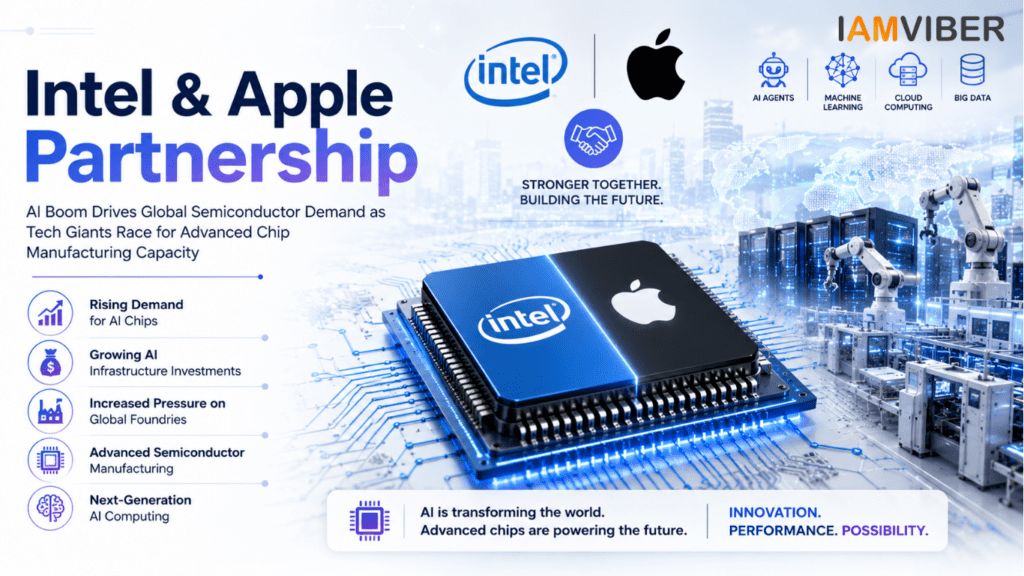
This trend is placing enormous pressure on global foundries and manufacturing facilities. The Apple-Intel partnership reflects a broader industry effort to secure reliable chip production capacity amid the ongoing AI boom. Industry observers believe companies with advanced manufacturing capabilities will become increasingly valuable as AI adoption accelerates worldwide.
The Intel & Apple Partnership could reshape the future of semiconductor manufacturing in the United States. Industry experts believe the Intel & Apple Partnership may strengthen domestic chip production, support AI infrastructure growth, and improve supply chain resilience. As demand for AI chips continues to rise, the Intel & Apple Partnership is being closely watched by investors and technology leaders worldwide.
U.S. Semiconductor Manufacturing Gets a Boost
The partnership also supports the broader goal of strengthening domestic semiconductor manufacturing.Over the past few years, the United States has prioritized investments in chip production to reduce dependence on overseas suppliers and improve economic security.
Semiconductors have become a critical component of modern technology infrastructure, powering everything from smartphones and laptops to electric vehicles, defense systems, and AI platforms. Intel has emerged as one of the key players in America’s semiconductor revival.
The company has announced major manufacturing expansions in states including Arizona and Ohio while investing heavily in advanced process technologies. If Apple chooses Intel as a manufacturing partner, it could become one of the highest-profile examples of domestic semiconductor collaboration in the industry.
The reported partnership could also impact Intel’s competitors.
TSMC currently dominates advanced semiconductor manufacturing and remains Apple’s primary chip supplier.
While Apple is unlikely to abandon TSMC entirely, any shift toward Intel would represent a significant strategic move. The development highlights growing interest in manufacturing diversification and could encourage other technology companies to explore alternative suppliers.
Samsung
Samsung has spent years expanding its foundry business in an effort to compete with TSMC.
A successful Apple-Intel collaboration could intensify competition among global chip manufacturers and increase pressure on Samsung to secure additional high-profile customers.
Challenges Remain for Intel
Despite the excitement surrounding the announcement, Intel still faces several challenges. Advanced semiconductor manufacturing remains one of the most complex industries in the world.
The company must continue executing its technology roadmap, improving production efficiency, and delivering competitive manufacturing processes. Intel will also need to meet Apple’s demanding quality standards if the partnership progresses beyond initial discussions.
Meanwhile, competitors such as TSMC and Samsung continue investing aggressively in next-generation chip technologies. As a result, long-term success will depend on Intel’s ability to consistently deliver world-class manufacturing performance.
The Future of AI Chips and Semiconductor Manufacturing
The Intel & Apple partnership announcement has generated significant excitement across the technology and investment communities.
For Intel, the collaboration could represent a major turning point in its efforts to rebuild manufacturing leadership and expand its foundry business.
For Apple, it provides an opportunity to diversify production, strengthen supply chain resilience, and support U.S.-based semiconductor manufacturing.
As AI adoption accelerates and demand for advanced chips continues to rise, strategic partnerships between technology leaders and semiconductor manufacturers are likely to become increasingly important. While many details remain unknown, one thing is clear: the potential Apple-Intel partnership has already become one of the biggest semiconductor stories of the year.
The reported Intel & Apple Partnership is being closely watched by industry experts because it combines Apple’s chip design expertise with Intel’s growing manufacturing ambitions. If the collaboration moves forward, the Intel & Apple Partnership could accelerate innovation in AI chips, strengthen semiconductor supply chains, and create new opportunities within the global foundry market. Beyond its immediate impact on both companies, the partnership highlights how strategic alliances are becoming increasingly important in meeting the rising demand for advanced semiconductor technologies.
FAQs
Why did Intel stock rise 11%?
Intel stock surged after President Donald Trump announced that Apple would partner with Intel on U.S. chip design and manufacturing initiatives, boosting investor confidence in Intel’s foundry business.
Why is Apple partnering with Intel?
Apple is reportedly exploring collaboration with Intel to expand manufacturing capacity, strengthen supply chain resilience, and support domestic semiconductor production.
What is Intel Foundry?
Intel Foundry is Intel’s contract chip manufacturing business that produces semiconductors for external customers, competing with TSMC and Samsung.
How does this impact the semiconductor industry?
The partnership could strengthen U.S. chip manufacturing, increase competition among foundries, and support growing demand for AI chips and advanced semiconductor technologies.
What does this mean for AI development?
As AI demand drives the need for more advanced chips, partnerships between chip designers and manufacturers are becoming increasingly important to ensure adequate production capacity and technological innovation.
Topics to follow: Current Affairs & Insights Tech Innovation GenZ entrepreneurship Collaborative Fashion GEO AI Agentic SME