The cybersecurity landscape is undergoing a profound transformation. As organizations increasingly adopt artificial intelligence (AI) to enhance productivity, cybercriminals are also leveraging advanced technologies to launch more sophisticated and scalable attacks.
In response to these evolving threats, technology leaders around the world are investing heavily in AI-powered security solutions designed to detect, prevent, and remediate cyber risks faster than traditional approaches.
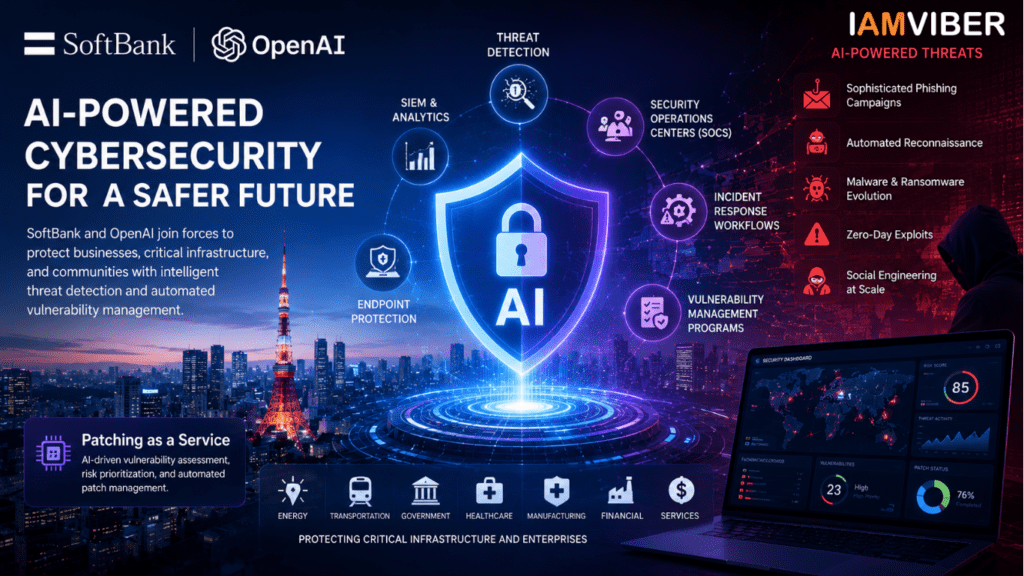
In a significant development for the cybersecurity industry, SoftBank Group has announced the launch of an AI-powered cybersecurity service developed in collaboration with OpenAI. The new offering, known as “Patching as a Service” (PaaS), aims to help organizations identify vulnerabilities, prioritize remediation efforts, and automate security patch deployment across critical systems.
The announcement marks another milestone in the growing strategic partnership between SoftBank and OpenAI and highlights the increasing role of AI in protecting enterprise infrastructure from emerging cyber threats.
The Growing Need for AI-Driven Cybersecurity
Cybersecurity threats have become more complex than ever before. Organizations face a constant barrage of attacks ranging from ransomware and phishing campaigns to supply-chain compromises and zero-day exploits. Traditional security operations often struggle to keep pace with the volume and sophistication of these threats.
One of the most persistent challenges is vulnerability management. Enterprises typically operate thousands of applications, servers, and devices, each requiring regular security updates. Delays in applying critical patches create opportunities for attackers to exploit known vulnerabilities.
Recent industry reports indicate that many successful cyberattacks exploit weaknesses for which security patches were already available. The problem is not always a lack of awareness but rather the difficulty of identifying, prioritizing, testing, and deploying updates across large and complex IT environments.
AI offers a promising solution. By analyzing vast quantities of security data, AI systems can identify vulnerabilities, assess risks, recommend remediation actions, and automate routine security tasks. This enables organizations to respond more rapidly and efficiently while reducing the burden on security teams.
SoftBank and OpenAI Join Forces
SoftBank has been actively expanding its AI initiatives in recent years. Under the leadership of founder and CEO Masayoshi Son, the company has positioned itself as a major investor and advocate for transformative AI technologies.
Its collaboration with OpenAI reflects a shared vision of deploying advanced AI solutions across enterprise environments. Through their joint venture, SB OpenAI Japan, the two organizations aim to accelerate AI adoption among Japanese businesses and government agencies.
The launch of the cybersecurity service represents one of the first major enterprise products to emerge from this partnership. By integrating OpenAI’s advanced AI models with SoftBank’s enterprise infrastructure expertise, the companies seek to create a powerful platform capable of addressing modern cybersecurity challenges.
Understanding “Patching as a Service”
At the core of the new offering is an intelligent vulnerability management framework designed to simplify and automate the patching process.
The service performs several key functions:
1. Vulnerability Detection
The AI system continuously scans organizational environments to identify software vulnerabilities, misconfigurations, and potential security weaknesses. Rather than relying solely on static databases, the platform can analyze contextual information to determine how vulnerabilities affect specific business environments.
2. Risk Prioritization
Not all vulnerabilities pose the same level of risk. Security teams often struggle to determine which issues require immediate attention.
The AI engine evaluates multiple factors, including:
- Severity of the vulnerability
- Exploit availability
- Exposure level
- Business impact
- Asset criticality
This allows organizations to focus resources on the most pressing threats rather than attempting to address every vulnerability simultaneously.
3. Automated Patch Management
One of the most valuable aspects of the service is its ability to automate patch deployment workflows.
The platform can:
- Recommend appropriate security updates
- Schedule patch implementation
- Validate deployment success
- Monitor post-patch performance
Automation reduces operational overhead and helps ensure critical updates are applied more consistently across enterprise environments.
4. Continuous Monitoring
Cybersecurity is not a one-time activity. The platform provides ongoing monitoring and assessment capabilities that enable organizations to maintain a strong security posture over time.
This continuous approach helps organizations stay ahead of newly discovered vulnerabilities and emerging threats.
Protecting Critical Infrastructure
A major focus of the initiative is the protection of critical infrastructure sectors.
Industries such as:
- Energy
- Transportation
- Telecommunications
- Manufacturing
- Healthcare
- Financial services
are increasingly targeted by cybercriminals and nation-state threat actors.
Disruptions to these sectors can have far-reaching economic and societal consequences. As digital transformation accelerates, operational technology (OT) systems and industrial control systems become more interconnected, creating additional attack surfaces.
SoftBank has indicated that the new AI-powered cybersecurity platform is intended to strengthen defenses for these essential services by improving vulnerability management and reducing exposure to cyber threats.
For organizations operating critical infrastructure, rapid identification and remediation of security weaknesses can mean the difference between preventing an incident and experiencing a major operational disruption.
Benefits for Enterprise Organizations
The introduction of AI-powered patch management offers several advantages for businesses.
Faster Response Times
Traditional vulnerability management processes can take days or weeks. AI-driven automation significantly reduces response times, enabling organizations to address threats before attackers can exploit them.
Improved Operational Efficiency
Security teams frequently face staffing shortages and increasing workloads. Automating routine tasks allows personnel to focus on strategic security initiatives and incident response activities.
Enhanced Accuracy
AI systems can analyze large volumes of data more quickly and consistently than manual processes. This improves the accuracy of vulnerability assessments and reduces the likelihood of overlooking critical risks.
Reduced Cyber Risk
By shortening the window between vulnerability discovery and remediation, organizations can lower their overall exposure to cyberattacks.
Better Resource Allocation
Risk-based prioritization ensures that security teams focus on vulnerabilities that pose the greatest threat to business operations.
The Broader Trend of AI in Cybersecurity
The SoftBank–OpenAI collaboration reflects a broader industry trend toward AI-enabled cybersecurity solutions.
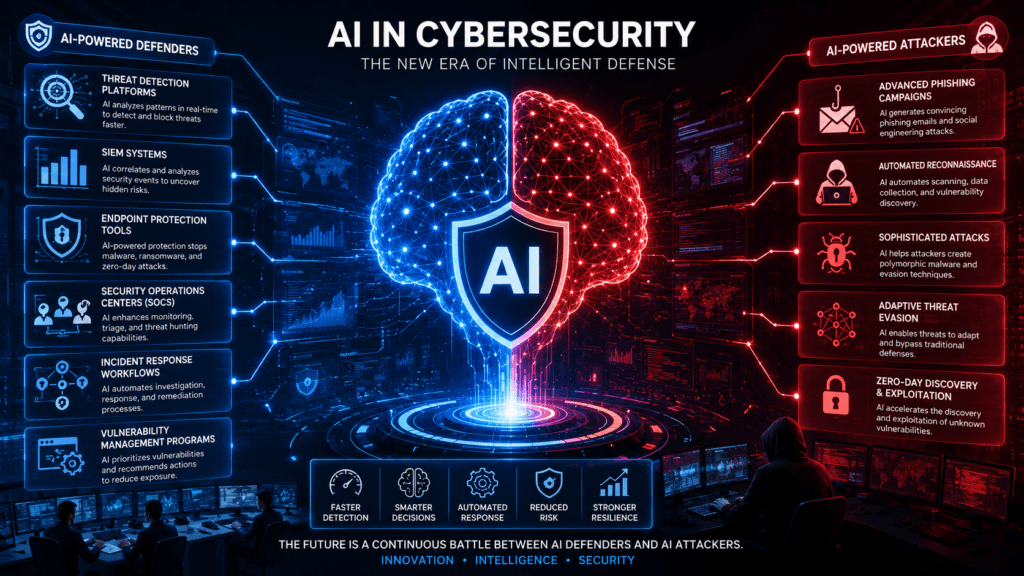
Major technology providers worldwide are integrating AI into:
- Threat detection platforms
- Security information and event management (SIEM) systems
- Endpoint protection tools
- Security operations centers (SOCs)
- Incident response workflows
- Vulnerability management programs
Generative AI, in particular, is emerging as a powerful tool for analyzing security data, generating recommendations, and assisting security professionals with complex decision-making processes.
At the same time, organizations must recognize that AI introduces new security challenges. Adversaries are increasingly using AI to create more convincing phishing campaigns, automate reconnaissance activities, and develop sophisticated attack techniques.
This dynamic creates an ongoing technological competition between defenders and attackers, making innovation in cybersecurity more important than ever.
Challenges and Considerations
While AI-powered cybersecurity solutions offer substantial benefits, organizations should approach implementation thoughtfully.
Key considerations include:
Human Oversight
AI should complement—not replace—human expertise. Security professionals remain essential for validating recommendations, handling complex incidents, and making strategic decisions.
Data Privacy
Organizations must ensure that security data processed by AI systems complies with relevant privacy regulations and governance requirements.
System Integration
Successful deployment requires integration with existing IT infrastructure, security tools, and operational workflows.
Trust and Transparency
Organizations need confidence in how AI systems reach conclusions and prioritize vulnerabilities. Transparency is essential for building trust and ensuring effective adoption.
Conclusion
The launch of SoftBank’s AI-powered cybersecurity service in partnership with OpenAI represents an important step forward in the evolution of enterprise security. By combining advanced AI capabilities with automated vulnerability management and patch deployment, the platform aims to help organizations strengthen defenses against increasingly sophisticated cyber threats.
As cyberattacks continue to grow in frequency and complexity, traditional security approaches alone may no longer be sufficient. AI-driven solutions offer the speed, scalability, and intelligence needed to protect modern digital environments.
For businesses, government agencies, and critical infrastructure operators, the SoftBank–OpenAI initiative demonstrates how artificial intelligence is moving beyond productivity applications and becoming a core component of cybersecurity strategy. The partnership signals a future in which AI not only enhances business operations but also plays a crucial role in safeguarding the digital systems that underpin modern society.
Topics to follow: Current Affairs & Insights Tech Innovation GenZ entrepreneurship Collaborative Fashion GEO AI Agentic SME