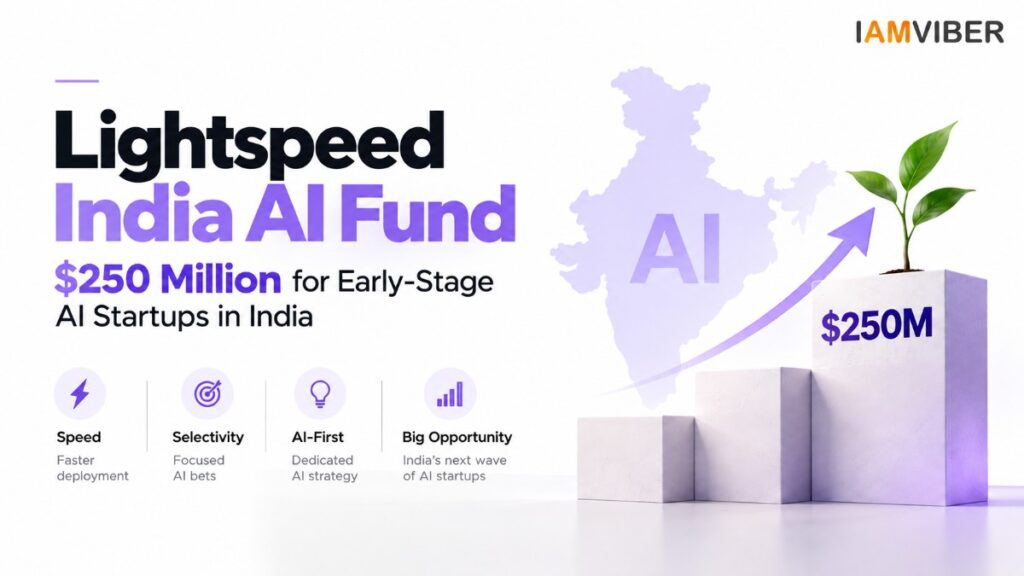
India’s startup ecosystem is entering a new phase in which artificial intelligence is moving from an emerging technology theme to a core investment priority. The announcement of the Lightspeed India AI Fund, targeting $250 million for a new early-stage vehicle, shows how strongly investors are beginning to position capital around AI-first businesses. The fund is designed around early-stage opportunities in India and Southeast Asia, with AI placed at the center of its investment strategy.
The Lightspeed India AI Fund is expected to be about half the size of the previous $500 million India fund raised in 2022. The smaller target does not necessarily indicate lower ambition. Instead, the strategy appears designed around faster deployment, concentrated bets, and a shorter investment period. The new vehicle is expected to begin investing within roughly two months, with a planned investment period of about two and a half years.
What makes the Lightspeed India AI Fund significant is its dedicated AI focus. Rather than spreading capital across every major startup category, the vehicle is structured to seek companies where artificial intelligence is central to the product, technology, or business model.
What is the Lightspeed India AI Fund?
The Lightspeed India AI Fund is the planned fifth dedicated India fund from the venture platform, with a target size of $250 million. The vehicle follows the firm’s earlier $500 million India fund and is intended to support early-stage companies across India and Southeast Asia.
Reported investor materials indicate that the previous India fund had already committed around 80% of its capital. The new structure is designed to match the current pace of deployment while allowing the firm to return to fundraising sooner.
For founders, the Lightspeed India AI Fund matters because dedicated AI capital can change the type of businesses investors actively seek. Funding interest is increasingly moving toward teams that can demonstrate a clear AI advantage, strong product adoption, proprietary data, technical depth, or an ability to solve difficult industry-specific problems.
Why is AI becoming the center of India startup funding?
The Indian AI opportunity is moving beyond the idea of simply building another general-purpose model. India has a large developer base, a huge digital population, multiple languages, complex regulatory environments, and many industries that remain underserved by software.
That combination creates an opportunity for applied AI. Startups can build products for healthcare, finance, manufacturing, education, logistics, customer support, cybersecurity, agriculture, legal workflows, and enterprise operations.
The Lightspeed India AI Fund reflects this shift toward application-layer AI. The opportunity includes not only models, but also infrastructure, agent platforms, workflow automation, vertical AI, developer tools, and products that help organizations deploy AI safely and efficiently.
For India AI startups, this can change the fundraising conversation. Investors may increasingly ask not simply whether a company uses AI, but whether AI creates a meaningful advantage that is difficult for traditional software businesses to copy.
Why a smaller $250 million fund can still be meaningful
The Lightspeed India AI Fund appears designed around a more focused deployment cycle. A shorter investment period can allow the team to concentrate on a specific window of opportunity rather than spreading capital commitments across a much longer timeframe.
The strategy also suggests a preference for depth over breadth. A dedicated AI mandate can help investors build specialized knowledge around technical founders, AI infrastructure, emerging models, agentic systems, and enterprise adoption.
For founders, that can mean a more technology-specific evaluation process. A strong AI thesis, measurable user value, defensible technology, and efficient execution may become increasingly important.
The rise of early-stage AI startups in India
Early-stage AI startups are attracting attention because modern AI tools have reduced the cost and time required to build software. Small teams can prototype products, automate workflows, test distribution, and serve customers with fewer resources than traditional software companies often required.
But easier development also creates stronger competition. Building an AI-powered application is no longer enough to create a long-term moat. Startups need differentiated data, distribution, domain expertise, integrations, proprietary workflows, strong customer relationships, or another defensible advantage.
This is where the Lightspeed India AI Fund becomes relevant. A dedicated fund can target companies at the stage where the product is still being shaped and where strategic support, technical guidance, hiring networks, and follow-on financing can matter alongside the initial investment.
The Lightspeed India AI Fund also covers Southeast Asia, expanding the opportunity beyond India. For startups built in India, regional expansion can become part of the business case much earlier.
India’s opportunity may be in applied AI
One of the biggest signals from the Lightspeed India AI Fund is the emphasis on applied innovation. India may not need to compete only on the most expensive layer of AI research. It can also build companies that make advanced AI useful in real-world environments.
Indian businesses operate across many languages, income levels, regional preferences, compliance requirements, and fragmented sectors. AI systems that understand these conditions can potentially solve problems that generic global products do not address as effectively.
This creates space for vertical AI startups. A healthcare AI product may need different data and workflows from a banking AI platform. A multilingual customer-support agent may require different technology from an AI system used by manufacturers.
For India AI startups, local complexity can become a product advantage rather than merely a challenge.
What this means for founders
The Lightspeed India AI Fund could raise the bar for startups seeking institutional capital. Founders may need to show more than a strong idea or an impressive AI demo.
Investors are likely to examine how deeply AI is integrated into the business, whether the technology improves a measurable outcome, how quickly customers adopt the product, and whether the company can build a defensible position.
A startup does not necessarily need to build its own foundation model. In many cases, the opportunity can come from combining existing models with proprietary data, industry workflows, automation, integrations, and excellent user experience.
What investors may look for next
The next wave of India startup funding may increasingly concentrate on AI agents, vertical AI, developer infrastructure, cybersecurity, enterprise automation, robotics, voice AI, multilingual systems, and tools that make AI deployment more reliable.
The Lightspeed India AI Fund also brings AI infrastructure into focus. As companies use multiple models and increasingly complex AI workflows, businesses need systems for observability, evaluation, security, model routing, cost management, and governance.
The Lightspeed India AI Fund could therefore influence the ecosystem beyond the startups it directly backs. A dedicated AI vehicle can affect what founders build, what talent joins startups, which markets receive attention, and how other investors think about future opportunities.
How the funding environment could change
More dedicated AI capital can help ambitious startups scale, hire technical talent, and compete for global markets. At the same time, stronger investor attention can increase expectations around growth, technical differentiation, and capital efficiency.
The Lightspeed India AI Fund matters not simply because of its $250 million target, but because it represents a broader change in how AI opportunities are being evaluated.
This shift could also reshape AI funding in India. Startups that once positioned themselves as software companies with an AI feature may increasingly reposition around AI-native products, automated workflows, proprietary intelligence, and measurable business outcomes.
A new phase for India’s AI ecosystem
India’s AI startup ecosystem is moving from experimentation toward commercialization. Engineers, founders, enterprises, and investors are increasingly building around practical AI applications rather than treating the technology as a distant research opportunity.
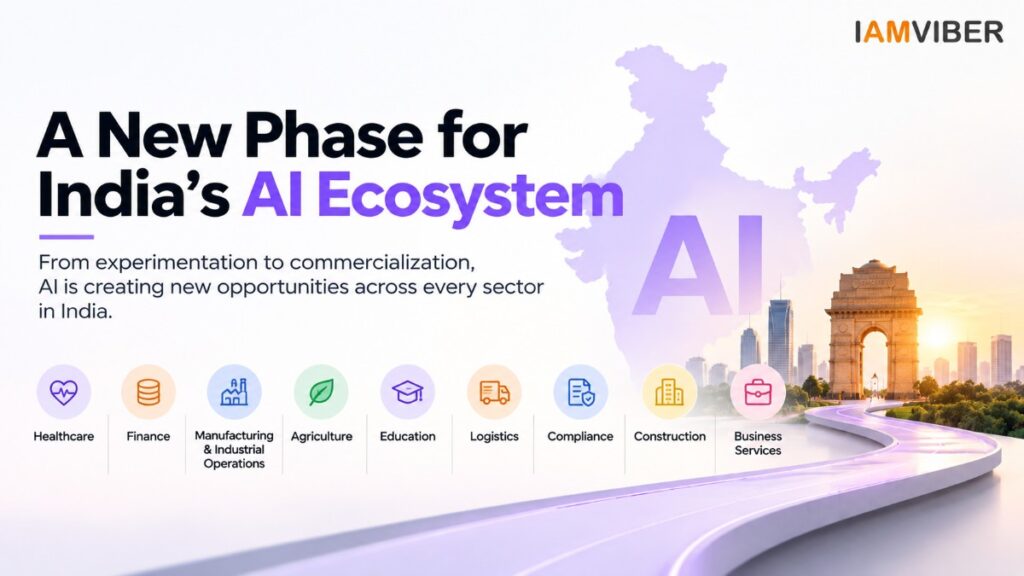
The Lightspeed India AI Fund fits into this transition. Its early-stage mandate, AI-first strategy, and regional scope point toward a market where investors expect AI to generate companies across many sectors.
The next generation of startups may emerge from less obvious categories such as industrial operations, compliance, logistics, finance, healthcare administration, construction, agriculture, education, and business services. AI can become the operating layer that makes these sectors more automated and data-driven.
What the $250 million target signals
The Lightspeed India AI Fund sends a strong market signal: AI is becoming a dedicated investment category in India rather than a secondary theme inside a diversified venture portfolio.
The significance of the fund should be viewed in context. The Lightspeed India AI Fund is smaller than its predecessor, but it is more narrowly focused. That combination suggests a strategy built around speed, selectivity, and a specific technology thesis.
For entrepreneurs, this could mean more investors will expect AI startups to demonstrate technical depth and measurable business impact. For the broader ecosystem, it could increase competition for talent, customers, and early-stage capital.
The Lightspeed India AI Fund may ultimately be one part of a much larger trend: the shift of India’s venture ecosystem toward AI-native companies.
Final takeaway
The most important part of the Lightspeed India AI Fund story is not simply the $250 million figure. It is the concentration of early-stage capital around artificial intelligence.
India already has several ingredients needed to build a major AI application ecosystem: engineering talent, digital infrastructure, large and diverse markets, and a growing base of businesses willing to experiment with AI.
As funding becomes more focused, the next winners may not necessarily be companies with the biggest models. They may be teams that use AI to solve difficult, expensive, and highly specific problems better than existing alternatives.
For founders building in India, the message is clear: AI is no longer just a feature. It is increasingly becoming the foundation of the next generation of startups.
Frequently Asked Questions
1. What is the Lightspeed India AI Fund?
The Lightspeed India AI Fund is a proposed $250 million fund focused on investing in early-stage AI startups across India and Southeast Asia.
2. How much is the Lightspeed India AI Fund targeting?
The fund is targeting $250 million in capital for investments in early-stage artificial intelligence companies.
3. What type of startups will the fund invest in?
The fund is focused on early-stage AI startups, including companies building AI applications, infrastructure, automation products, developer tools, and industry-specific AI solutions.
4. Why is AI funding in India increasing?
India has a large technology talent pool, a growing digital economy, and significant opportunities to apply AI across industries such as finance, healthcare, education, manufacturing, logistics, and customer service.
5. What does the fund mean for India AI startups?
It could create more opportunities for India AI startups to access institutional capital, scale their products, hire technical talent, and expand into international markets.
6. Is the Lightspeed India AI Fund only focused on India?
No. The fund is expected to focus on India and Southeast Asia, giving the investment strategy a broader regional scope.
7. What are early-stage AI startups?
Early-stage AI startups are young companies developing products or businesses where artificial intelligence plays a central role in the technology, product experience, or business model.
8. Why is the $250 million AI fund important for India’s startup ecosystem?
The fund highlights the growing importance of AI as an investment category and could contribute to increased capital, innovation, and competition within India’s emerging AI startup ecosystem.
Topics to follow on IAMVIEBR : AI & Tech, Startup, AI Creative, Agentic AI, Current Affairs & Insights, Collaboration