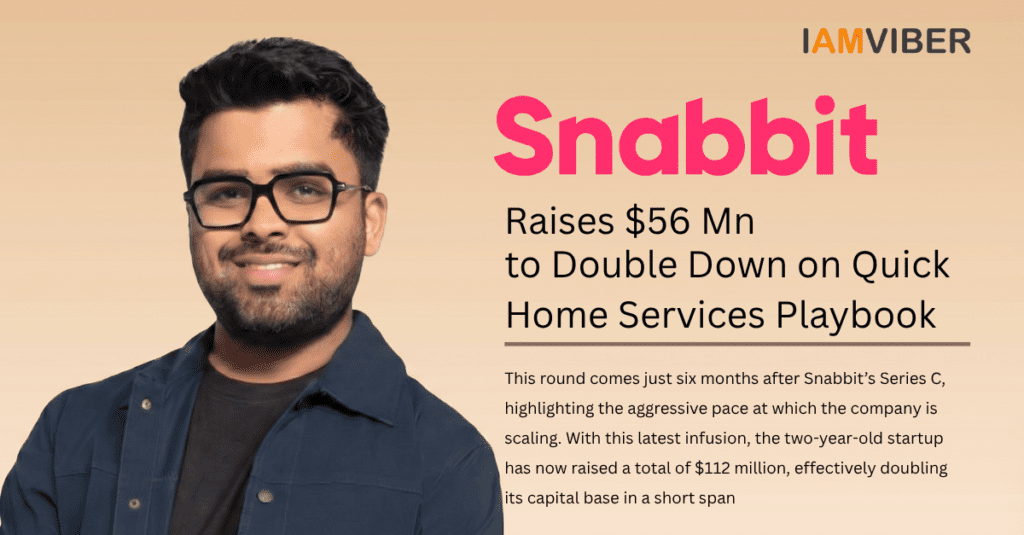
Snabbit, Founded by Ayush Agarwal, Snabbit is rapidly emerging as one of the most exciting startups within India’s evolving home services landscape. In just two years, the company has transformed from a mere concept into a serious market contender—raising a total of $112 million and building a model that aligns perfectly with contemporary urban needs.Its latest Series D funding round of $56 million (₹527 crore) is not merely another funding announcement—it serves as a strong validation of both its vision and its execution.
A Funding Round Backed by Global Confidence
This round was co-led by major global investors such as Susquehanna Venture Capital, Mirae Asset Venture Investments, and Bertelsmann India Investments.What makes this round even more impressive is the continued support from existing investors—such as Nexus Venture Partners and Lightspeed Ventures—who have doubled down on their stakes; a move that typically signals robust internal performance metrics and deep confidence in future growth prospects.
Additionally, the entry of FJ Labs onto the cap table brings a fresh global perspective and strategic depth to the company.Raising a new round just six months after its Series C funding clearly signals one thing: Snabbit is moving at an accelerated pace—and the market is rewarding it for doing so.
Crafting the "Quick Services" Playbook
Snabbit Launched just two years ago, Snabbit has already raised a total of $112 million, making it one of the fastest-growing startups in India’s home services ecosystem. But beyond just capital, what truly sets Snabbit apart is its endeavor to completely reimagine the way services are delivered
From Booking Services to Delivering Instant Solutions
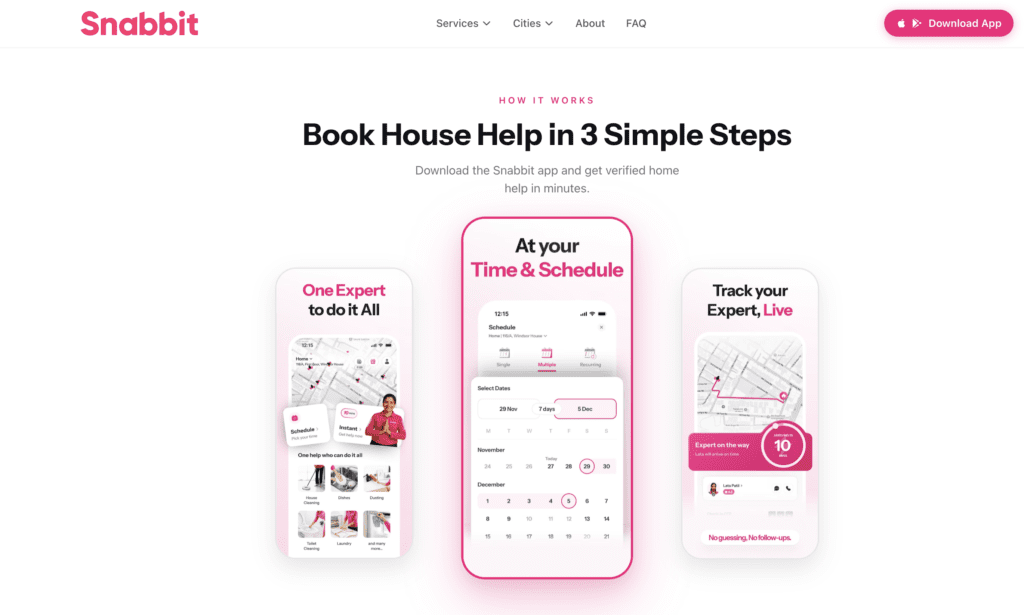
Traditionally, booking any home service—whether it be cleaning, plumbing, or repairs—has been plagued by issues such as uncertainty, delays, and inconsistent quality. Snabbit is attempting to resolve these pain points by introducing a “Quick Services” model.
Through its platform, users can avail themselves of the following services:
- Home cleaning services
- Electrical and plumbing repairs
- Routine maintenance tasks
- On-demand domestic assistance
Its greatest differentiator is speed. Instead of waiting days for a service to be completed, users can often summon professionals within just a few hours—thereby receiving the same kind of instant gratification typically associated with the quick commerce experience.
Inspired by Quick Commerce—But with a Fresh Twist
The inspiration behind Snabbit’s model is clear. Over the past few years, quick commerce platforms have completely reshaped customer expectations by making delivery virtually instantaneous. Snabbit is adopting this very same principle—not for products, however, but for services.
This shift is significant. Unlike product delivery, services are inherently more complex, as they involve numerous facets such as skill, availability, and quality of execution. To successfully introduce speed and reliability into this sector, mere logistical efficiency is insufficient; robust operational control is equally essential.
A New Definition of Convenience for Urban India
Snabbit’s vision aligns perfectly with the evolving dynamics of urban lifestyles. As professionals navigate their hectic and demanding schedules, their desire to delegate everyday tasks to others has grown significantly. Convenience is no longer merely a luxury; it is rapidly becoming a fundamental expectation. Snabbit is positioning itself right at the very epicenter of this transformation.
Strategic use of capital
With fresh capital in hand, Snabbit is expected to double down on multiple growth levers that will define its next phase.
Geographical spread: Expansion into urban India
One of the key focus areas will be expanding into new cities. Currently concentrated in major urban centers, Snabit will likely expand its presence in Tier 1 and select Tier 2 markets, where demand for organized home services is growing rapidly.
Geographic expansion isn’t just about entering new markets—it’s about replicating operational excellence at scale. Each city has its own supply chain, customer behavior, and competitive landscape, making execution crucial.
Strengthening the supply ecosystem
The core of any service platform is its supplier network—that is, the professionals who provide the service. Snabit expects to invest heavily in the following areas:
- Onboarding skilled service providers
- Training and certification programs
- Quality control mechanisms
Ensuring consistency across thousands of service providers is a complex challenge. However, it is also a key factor in building long-term customer trust.
Technology as a Key Enabling Factor
Technology will play a central role in Snabit’s expansion strategy. The company is likely to improve the following:
- Demand-supply matching algorithms
- Real-time availability tracking
- Route optimization and scheduling
- Customer experience interfaces
Improved technological infrastructure not only reduces service times but also improves utilization rates for service professionals—benefiting both sides of the market.
Broadening Service Categories
Snabbit may also look to add new categories in addition to the categories it currently has. It could be specialised services, maintenance packages with a subscription model or bundling to increase user engagement.”
Increasing categories helps to increase:
- Average order size
- Frequency of use
- Customer lifetime value
Massive changes in consumer behavior
Snabbit’s growth isn’t happening in isolation – it’s part of a larger shift in how consumers approach everyday services.
The Rise of Convenience-First Consumption
Urban India is witnessing a shift toward convenience-first consumption patterns. Time has become a premium resource, and consumers are increasingly willing to pay for services that save effort and reduce friction.
App-based platforms have already transformed sectors like:
- Food delivery
- Ride-hailing
- Grocery delivery
Home services are the next logical frontier.
Organization of a fragmented market
Historically, the home services industry in India has been highly fragmented and largely unorganized. Customers often relied on local vendors, with little transparency regarding pricing, quality, or reliability. Platforms like Snabit are changing this situation by implementing the following features:
- Standardized pricing
- Verified professionals
- Ratings and reviews
- Reliable service timelines
This change not only improves the customer experience but also formalizes a large portion of the workforce.
Why are investors paying attention to this?
The growing interest from global investors is driven by several structural advantages:
- High-frequency use cases (cleaning, repairs, maintenance)
- Strong potential for repeated use
- Large, untapped market size
- Opportunity to build strong brand loyalty
In many ways, the home services market offers the same characteristics that have made food delivery and e-commerce highly attractive sectors.
Emerging competitive landscape
Snabbit’s rapid growth also signals the beginning of intense competition in the quick home services sector.
A Playbook Similar to Food Delivery and Quick Commerce
Historically, convenience-based categories tend to evolve rapidly and competitively. Food delivery and instant commerce have seen these changes:
- Rapid expansion
- Heavy investment by investors
- Fierce competition
- Eventual consolidation
The instant home services sector is likely to follow a similar path.
Speed, reliability, and trust are key differentiating factors
Success in this market will not depend solely on funding. Key success factors will include:
- Providing fast service
- Consistently high quality
- Strong brand trust
- Efficient operations
Companies that can effectively balance these elements will emerge as long-term leaders.
Snabbit’s Early-Mover Advantage
With strong funding, rapid execution, and a clear strategic vision, Snabbit appears well-positioned to capture early market share. Its ability to scale quickly while maintaining quality will determine whether it can sustain this advantage.
What Lies Ahead for Snabbit
Snabbit’s journey so far suggests that it is not just building a company—it is helping define an entirely new category.
A Market Still in Its Early Stages
Despite growing interest, the quick home services market is still in its infancy. This leaves significant room for:
- Innovation
- Market expansion
- New business models
As consumer awareness grows, demand is expected to rise sharply.
Scaling Challenges and Opportunities
However, scaling a services business comes with its own challenges:
- Managing large, distributed workforces
- Maintaining service quality at scale
- Balancing supply-demand dynamics
- Navigating regional differences
Successfully addressing these challenges will be crucial for long-term success.
Final Take: A Category in the Making
Snabbit’s $56 million raise is more than just another funding announcement—it is a signal that the quick home services category is gaining serious momentum.
With strong backing from investors like Susquehanna Venture Capital, Mirae Asset Venture Investments, and Bertelsmann India Investments, and a sharp focus on execution, the company is positioning itself at the forefront of this transformation.
If it continues on its current trajectory, Snabbit could play a defining role in reshaping how urban India experiences home services—bringing speed, reliability, and convenience into a space that has long lacked all three.