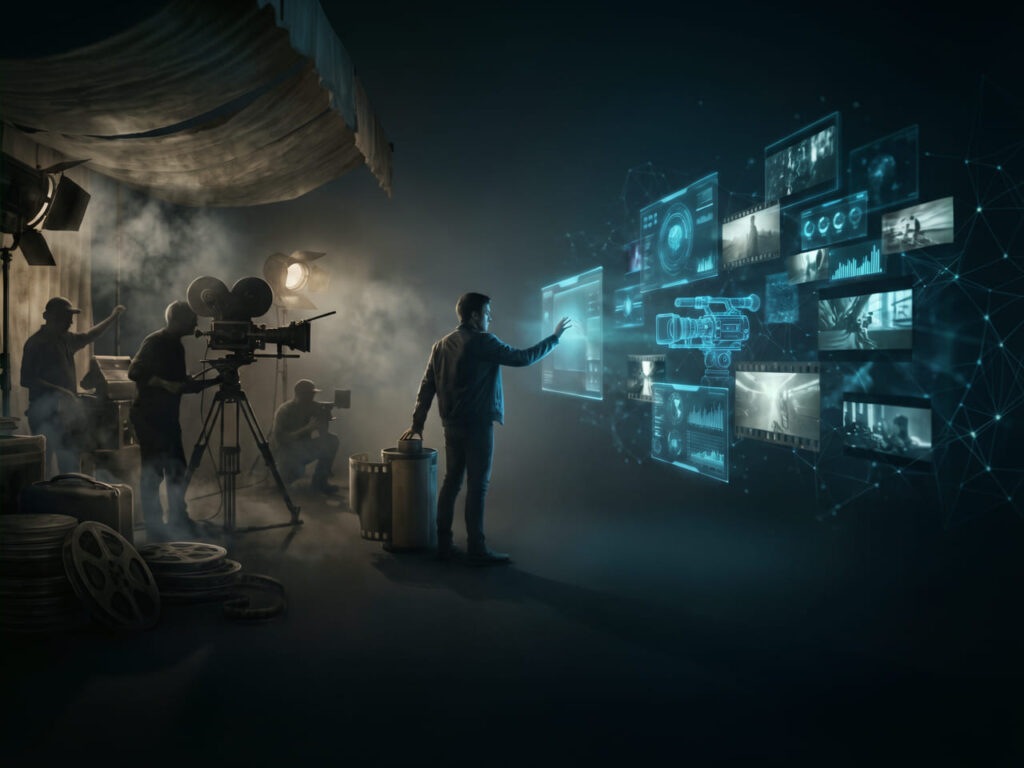
AI-powered filmmaking is rapidly transforming the entertainment industry, raising an important question: Will traditional studios be replaced by artificial intelligence? With tools like Runway ML and Sora, creators can now generate high-quality, cinematic videos using simple text prompts. This change has led to significant interest in keywords such as AI film production, AI video production, text-to-video AI, and automated film production tools. Rather than relying on large staffs, expensive equipment, and long production schedules, AI enables content creation to be faster, more scalable, and more cost-effective, making it a powerful alternative in today’s digital-first landscape.
One of the biggest benefits of AI-assisted filmmaking is the ability to optimize the entire production process. From scripting and storyboarding to editing and visual effects, AI tools can handle various stages of film production with incredible efficiency. Platforms like Pika Labs allow creators to experiment with scenes, angles, and styles in real-time, significantly reducing production costs. This makes AI-powered video production especially valuable for brands, content creators, and marketing teams looking to produce content quickly. As demand increases, search trends for AI-driven content creation, video automation software, and AI-driven film production tools continue to grow, highlighting the industry’s clear shift towards intelligent production systems.
However, even if AI revolutionizes cinema, it is unlikely to completely replace traditional studios in the near future. Studios bring human creativity, storytelling depth, and large-scale production expertise that cannot be fully replicated by AI alone. Rather, the future of cinema will be a hybrid model where AI enhances human creativity rather than replacing it. Filmmakers can use AI to speed up workflows, reduce costs, and explore new creative possibilities while maintaining artistic control. As AI continues to evolve, it will become a key tool in the film ecosystem, shaping a future where technology and creativity work together rather than against each other