AI- Artificial Intelligence Is Redefining the Role of Directors and Transforming the Future of Content Creation, From Storyboards to Screenplays
For decades, the director has been considered the creative backbone of filmmaking. Every iconic scene, emotional moment, and cinematic masterpiece has been shaped by a director’s vision. From selecting camera angles and guiding performances to making critical storytelling decisions, directors have traditionally been the driving force behind visual storytelling. But a significant shift is underway.
Artificial Intelligence is rapidly transforming how content is created, produced, and distributed. What started as a tool for automating repetitive tasks has evolved into something much bigger—a creative partner capable of generating scripts, designing visuals, creating storyboards, producing videos, and even simulating cinematic camera movements.
The question is no longer whether AI can assist filmmakers. The real question is: How much of the director’s role can AI take over?
The New Era of AI-Powered Storytelling
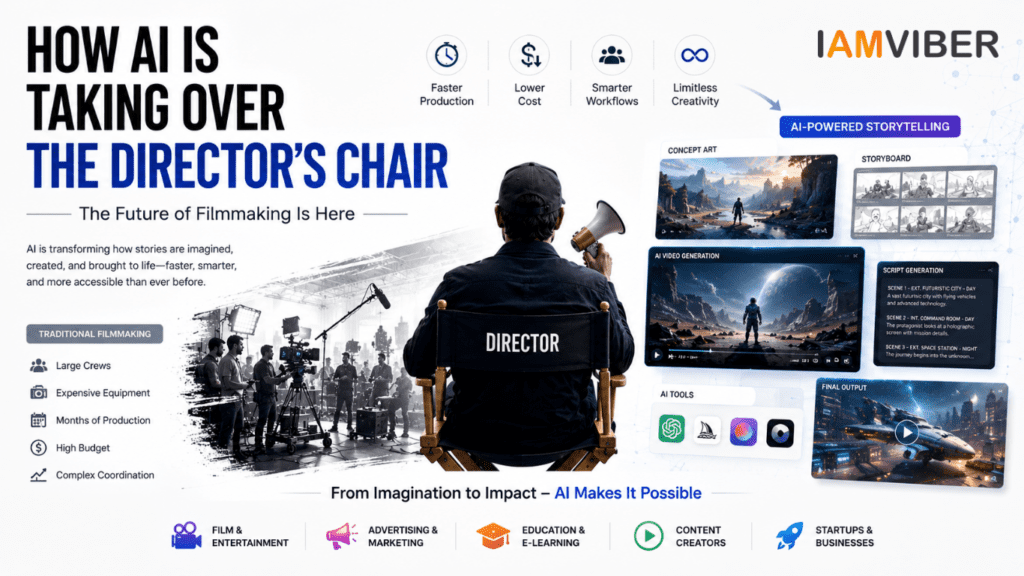
A few years ago, creating high-quality visual content required large teams, expensive equipment, and months of production. Filmmaking was often limited by budget, resources, and technical expertise.
Today, AI is changing that equation.
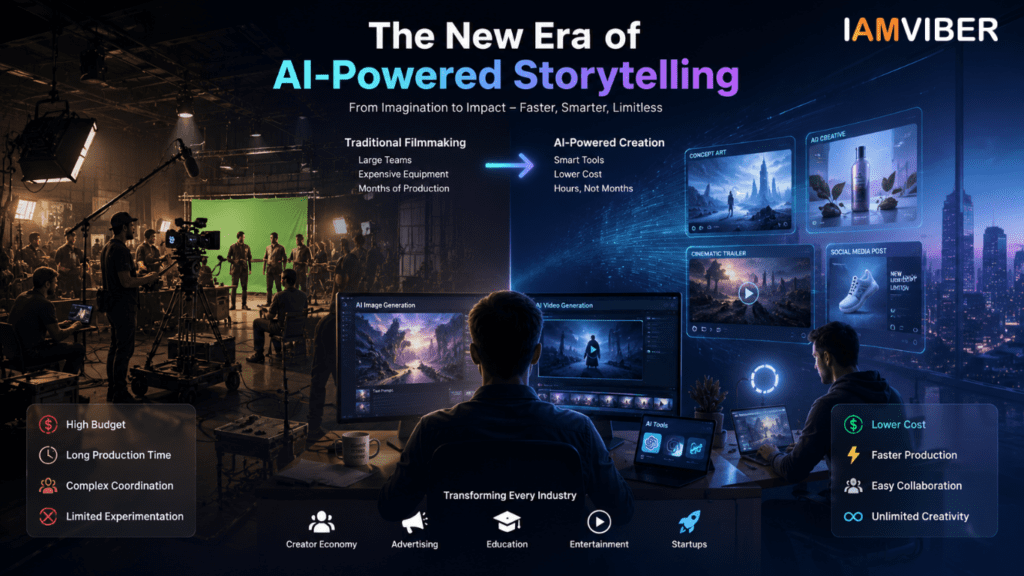
Creators can generate concept art from a simple text prompt. Marketing teams can create ad creatives in hours instead of weeks. Independent filmmakers can produce cinematic trailers without renting cameras or building massive production teams.
The barrier between imagination and execution is shrinking. This transformation is not just affecting Hollywood. It is reshaping the creator economy, advertising, education, entertainment, and startup ecosystems worldwide.
How AI Is Already Acting Like a Director
The traditional responsibilities of a director include visualizing stories, planning scenes, coordinating production, and ensuring the final output matches the intended vision. Interestingly, AI is beginning to assist in many of these areas.
Visual Development
Before a single frame is shot, directors spend significant time creating visual references and storyboards. Today, AI can generate multiple visual concepts within minutes. A creator can describe a scene and instantly receive cinematic interpretations, helping teams explore ideas faster than ever before.
Scene Planning
AI tools can understand cinematic language and generate scenes based on specific styles, moods, and camera movements. Whether it’s a dramatic close-up, a futuristic cityscape, or a high-energy action sequence, AI can create visual previews that help directors make faster creative decisions.
Script and Story Support
Generative AI can assist with brainstorming ideas, developing characters, refining dialogue, and exploring alternative storylines. While it may not replace great writers, it significantly accelerates the creative process.
Video Generation
Perhaps the most disruptive development is AI-generated video. Instead of relying entirely on cameras, locations, actors, and equipment, creators can now generate cinematic sequences directly from text prompts. What once required weeks of production can now be accomplished in a fraction of the time.
The Rise of the AI Director
As AI becomes more capable, a new role is emerging—the AI Director. This is not someone who simply uses AI tools. An AI Director understands storytelling, audience psychology, visual language, and technology. They know how to combine human creativity with machine intelligence to produce compelling content at scale.
The skill set is shifting. In the past, creators needed access to expensive equipment and large production teams. Today, they need:
- Creative vision
- Storytelling ability
- Prompt engineering skills
- Strategic thinking
- Understanding of audience behavior
- Knowledge of AI-powered production workflows
- The future director may spend less time managing logistics and more time directing intelligent creative systems.
Why This Matters for Startups and Creators
One of the most exciting aspects of AI filmmaking is accessibility. Historically, high-quality content production was reserved for companies with significant budgets. Startups often struggled to compete with larger brands because they lacked the resources to produce premium visual content. AI is changing that reality. A startup can now create:
- Product launch videos
- Brand commercials
- Social media campaigns
- Explainer videos
- Investor presentations
- Cinematic storytelling content
- without hiring massive production teams. The same opportunity exists for creators. A solo creator can now produce content that previously required writers, editors, designers, animators, and videographers.
- This is one of the biggest reasons why the creator economy is growing so rapidly.
Real-World Example: The Rise of AI-First Creative Studios
We’re already seeing companies build entirely new creative workflows around AI. Studios such as Vibeix are demonstrating how AI can accelerate production while maintaining high creative standards.
Instead of treating AI as a simple productivity tool, AI-first creative platforms use it throughout the content creation process—from ideation and storyboarding to visual generation and final production.
The result is faster execution, reduced costs, and the ability to experiment with creative ideas at a scale that was previously impossible. This doesn’t eliminate human creativity. It amplifies it.

Will AI Replace Human Directors?
This is the question everyone asks. The short answer is no. At least not entirely.
While AI can generate visuals, edit videos, suggest story structures, and automate production workflows, it still lacks something fundamental: human experience. Great storytelling is not just about creating impressive visuals. It is about understanding: Emotion, Culture, Relationships, Conflict, Motivation, Human behavior.
The most memorable films resonate because they reflect authentic human experiences. AI can generate content. Humans create meaning. That distinction remains incredibly important.
The Future Belongs to Human-AI Collaboration
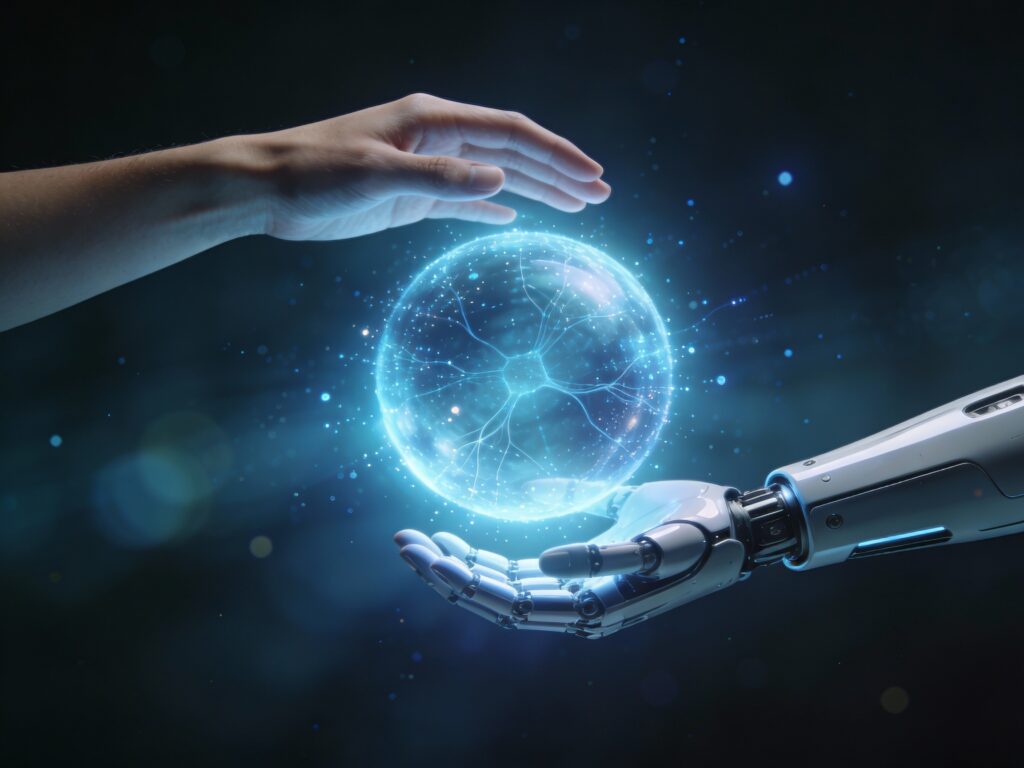
The most successful creators of the next decade will not be those who ignore AI, nor those who rely entirely on it. They will be the people who understand how to combine both worlds.
AI will handle repetitive production tasks, generate creative options, and accelerate execution. Humans will provide vision, taste, judgment, emotion, and storytelling direction. Together, this partnership has the potential to redefine content creation.
Final Thoughts
The director’s chair is evolving.AI is no longer just a supporting tool working behind the scenes. It is becoming an active participant in the creative process, influencing how stories are imagined, developed, and produced.
For filmmakers, creators, startups, and brands, this shift represents one of the biggest opportunities of the decade. The future of storytelling will not be determined by humans or machines alone.
It will be shaped by those who learn how to combine human creativity with artificial intelligence in ways that were never before possible.
And that future is already being directed.