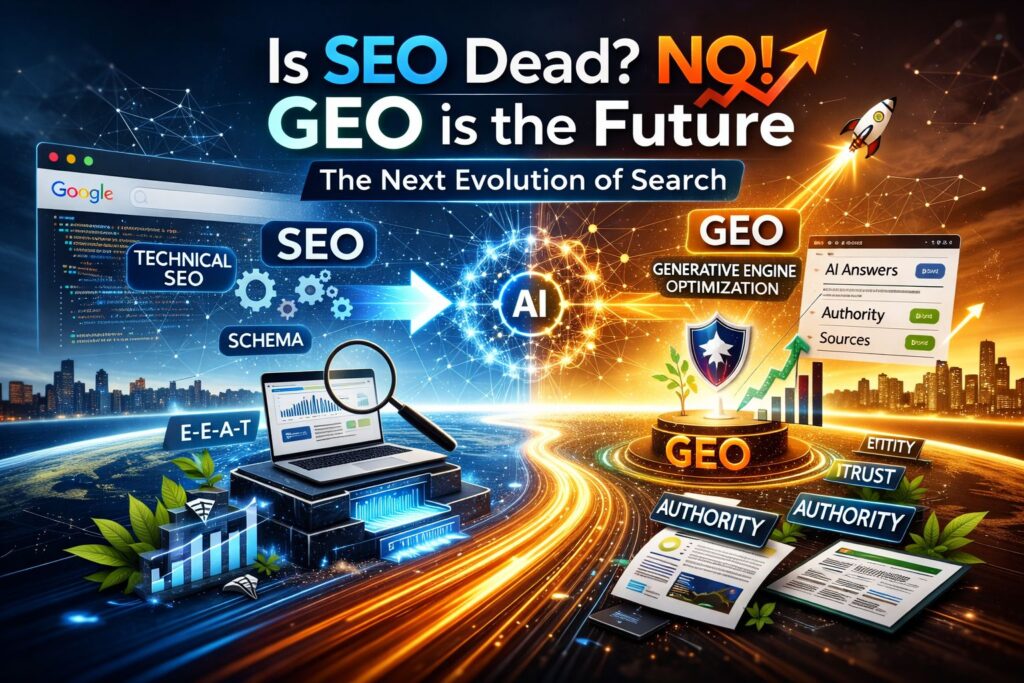
For nearly two decades, SEO has been the backbone of digital visibility. Brands focused on keywords, backlinks, and rankings to appear on Google’s first page. But the way people search for information has fundamentally changed. Users are no longer just typing keywords—they are asking questions. With the rise of AI tools like ChatGPT, Gemini, and Perplexity, people now expect instant, summarized answers, not a list of blue links. This shift is exactly why Generative Engine Optimization (GEO) is becoming more important than traditional SEO.
Users Want Instant Answers, Not Links
In the past, searching online was a multi-step process. Users would type a keyword, open several websites, read through long articles, and then compare information to make a decision. SEO worked perfectly in this era because visibility depended on rankings and clicks.
Today, the behavior is completely different.
Users now ask complete questions, such as:
- Which AI platform is best for creative design?
- How can a business rank in AI search results?
AI engines instantly analyze multiple sources and present a single, clear, summarized answer. The user often gets what they need without clicking any website at all.
This is where traditional SEO starts to lose power. Even if your website ranks on Google, it may never be seen if AI tools don’t reference, quote, or understand your brand. In the AI-first search era, visibility is no longer about traffic—it’s about being included in the answer.
If your content is not structured, clear, and authoritative enough for AI systems to trust and reuse, your brand becomes invisible. GEO ensures your content is written in a way that AI models can easily understand, extract, and cite—so your brand appears directly inside AI-generated responses, not just on search result pages.
AI Search Prioritizes Understanding, Not Just Keywords
Traditional SEO focuses heavily on keywords—how often they appear, where they are placed, and how many backlinks support them. While this still matters, AI-driven search engines work differently. They don’t just match keywords; they understand meaning, context, and intent.
AI models analyze:
- How clearly a brand explains what it does
- Whether the content answers real user questions
- How consistent and trustworthy the information is across the web
If your content is vague, over-optimized, or written only for search engines, AI tools may ignore it completely. GEO shifts the focus from keyword stuffing to clear explanations, structured content, and semantic clarity. When AI understands your brand, it is far more likely to include you in generated answers—where real visibility now lives.
Brand Authority Matters More Than Page Rankings
In the SEO era, a single well-optimized page could rank—even if the brand behind it was not well known. In the AI era, this is no longer enough. AI engines prefer brands they recognize and trust, not isolated pages.
- Consistent brand messaging across pages
- Clear “about” and “expertise” signals
- Repeated mentions of your brand in relevant contexts
GEO helps build this authority by positioning your brand as a reliable source, not just a ranking website. When AI systems repeatedly see your brand providing accurate, structured, and helpful information, they begin to treat it as a trusted reference—making your brand part of future AI answers automatically.