Soil is often overlooked. It sits beneath everything, rarely seen, rarely discussed. But healthy soil is one of the most important foundations of human life.
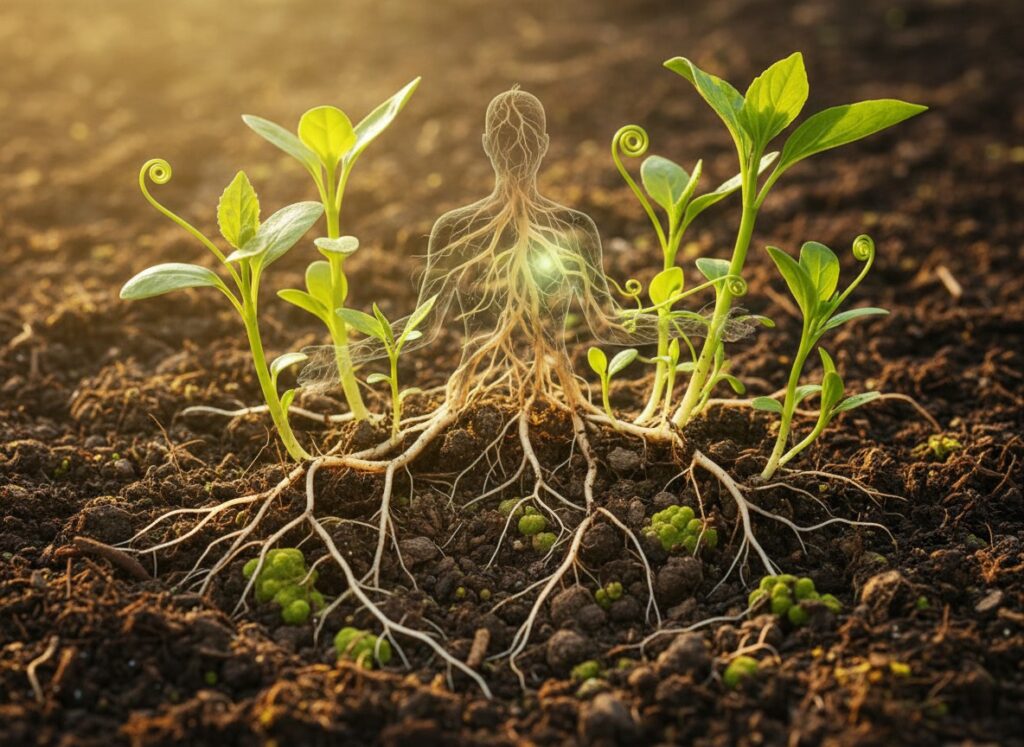
Far from being inert, soil is alive. A single teaspoon of fertile soil contains millions of microorganisms that work continuously to break down organic matter, recycle nutrients, and support plant roots. These organisms form complex networks that help plants absorb minerals, regulate water, and defend against disease.
When soil is treated gently—through crop rotation, organic matter replenishment, and minimal chemical disturbance—it becomes more resilient over time. When soil is pushed too hard, sprayed excessively, or left without rest, its living systems begin to collapse.
Plants grown in depleted soil often rely on external inputs just to survive. While these inputs can keep yields high, they cannot fully replace what living soil provides naturally. Over time, food grown in weakened soil tends to lose complexity—both nutritionally and structurally.
Researchers are increasingly exploring the connection between soil health, plant health, and human health. While science is still mapping the exact pathways, the principle is simple: we cannot separate the health of food from the health of the land it comes from.
By supporting food grown in healthier soil systems, consumers indirectly support stronger ecosystems, more resilient farms, and food that is naturally more balanced.
Soil may be silent, but it shapes everything we eat.