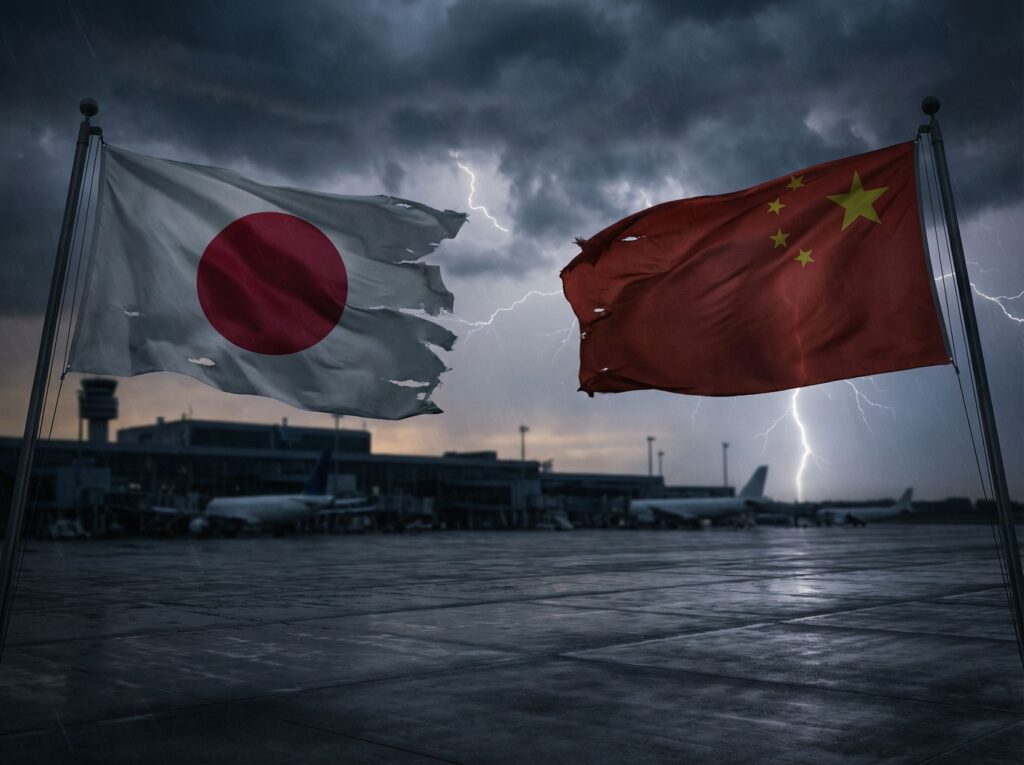
A diplomatic spark turned into a full-blown international moment this week after China issued a
warning asking its citizens to avoid travelling to Japan. The trigger was a statement by Japan’s
Prime Minister, who spoke openly about how any Chinese attack on Taiwan could directly
threaten Japan’s own security. The comment didn’t sit well with Beijing, and the reaction came
faster than anyone expected.
China responded by summoning Japan’s ambassador, delivering a formal protest, and then
releasing a public travel advisory. Such advisories may sound routine, but in reality, they are
political signals—loud ones. They hint at rising tension, a shift in tone, and the kind of diplomatic
message meant to be heard far beyond tourism circles.
For Japan, the Prime Minister’s remarks reflect a growing fear in Tokyo that the regional balance
is changing. Taiwan sits too close, trade routes are too important, and Japan’s own defence
discussions have already been moving in a more assertive direction. When the new PM tied
Taiwan’s fate so directly to Japan’s security, it echoed concerns that have been simmering
quietly for years.
China’s response shows how sensitive the Taiwan issue has become. Any public statement
from major powers—even if it’s just a few words—gets interpreted as pressure, posturing, or
challenge. And a travel warning, while seemingly about safety, sends a message to citizens and
the world: Japan’s leadership crossed a line.
Meanwhile, people who had vacations planned, business trips scheduled, or cultural visits lined
up are suddenly caught in the middle of a geopolitical argument they had nothing to do with.
Tourism bodies in Japan are watching closely, businesses are assessing potential drops in
travel, and political commentators are picking apart every sentence for hints of what comes
next.
A single remark, a diplomatic protest, and a travel advisory—enough to shake the region for
days.