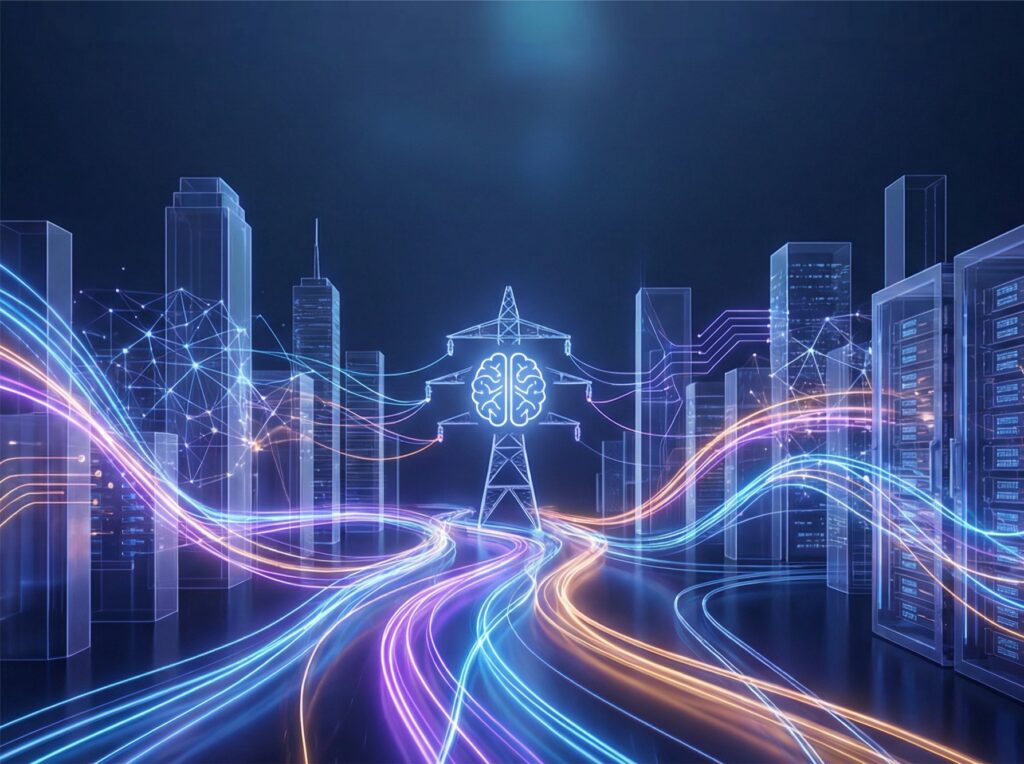
Artificial Intelligence (AI) is sometimes referred to as the new electricity in this digital age –
and for good reason. Like electricity that evolved to power industries, cities and daily life
through second industrial revolution, AI is transforming now itself as a new foundational
technology driving innovation across every sector. And it’s not confined to a specific use case –
instead, it quietly improves systems, processes, and decisions across the board.
Electricity didn’t supplant existing industries; it allowed them to transform. Factories were
automated, homes became more intelligent and productivity exploded. In the same way that
AI is not bound to one use case. It undergirds search engines, recommendation systems and
fraud detection; medical diagnostics, autonomous vehicles and smart assistants. Meanwhile,
there are millions who probably use AI every day but have no idea that they’re doing so.
One reason AI is likened to electricity is its ubiquity. AI can help anything: healthcare, finance,
education, manufacturing, retail, agriculture and entertainment. Any vertical that is generating
data can be helped by AI-powered insights, automation, and optimization. That makes AI what
economists call a general-purpose technology with the potential to alter our world forever.
AI easier makes the process more efficient and scalable. Processes that previously took lots of
human work — analyzing data, making predictions and personalization — can occur further and
faster due to the superhuman ability to run Scikit-learn at scale. It is how businesses can rapidly
innovate, lower expenses and react in real time to marketplace changes.
Moreover, AI amplifies human potential. Rather than displacing human workers, it extends
human capabilities by automating routine tasks and assisting in complex decision-making. This
liberates the individual to concentrate on creativity, strategy and problem-solving.
In conclusion, AI is the new electricity – because it powers the digital world from behind, driving
rapid transformation at every level. If electricity marked the industrial age, AI is its equivalent in
the digital era — changing how we work, innovate and live.