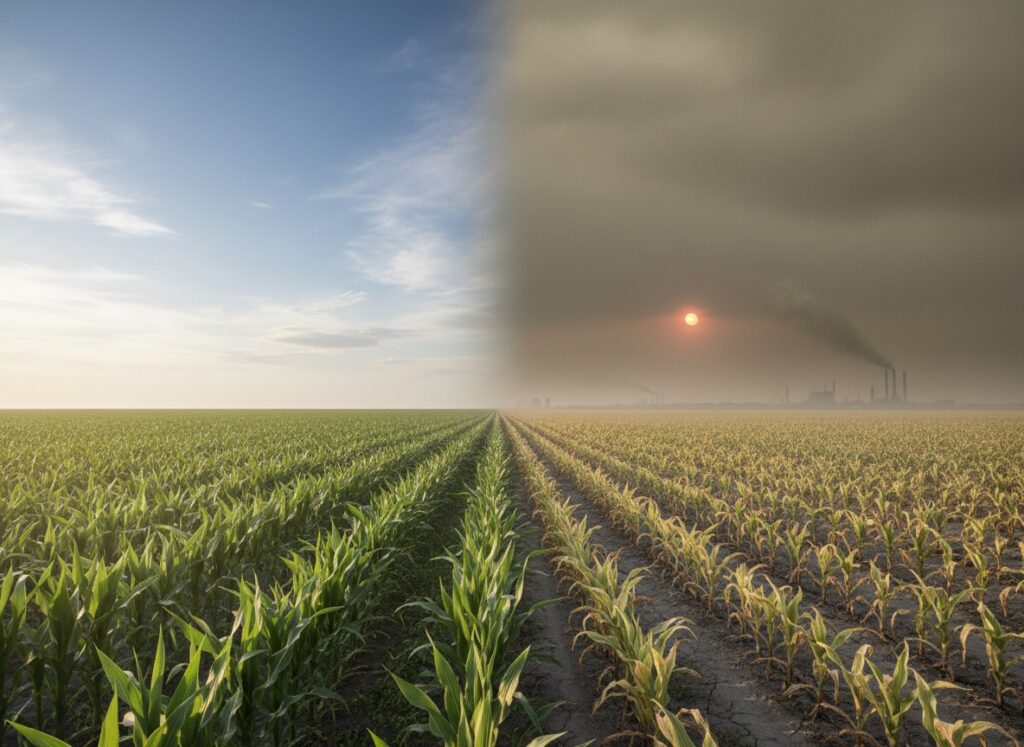
When people talk about climate change and food, the conversation usually focuses on visible damage—failed crops, floods, droughts, or rising prices. These are real and serious concerns. But there is another change taking place that is far less visible, yet equally important: the nutritional quality of our food itself is changing.
As levels of carbon dioxide (CO₂) increase in the atmosphere, plants respond biologically. CO₂ is a key input for photosynthesis, so higher levels can cause plants to grow faster and appear healthier. But this rapid growth comes with a trade-off. Studies have shown that under higher CO₂ conditions, many crops begin to accumulate more carbohydrates while their concentration of important minerals like iron, zinc, magnesium, and even protein begins to decline.
When soil is treated gently—through crop rotation, organic matter replenishment, and minimal chemical disturbance—it becomes more resilient over time. When soil is pushed too hard, sprayed excessively, or left without rest, its living systems begin to collapse.
Micronutrients play a quiet but vital role in human health. Iron supports oxygen transport in the blood, zinc supports immune function and healing, and protein supports muscle, hormones, and repair. When these nutrients are diluted over time, the effects may not be immediate, but they accumulate slowly—lower energy, weaker immunity, slower recovery.
This shift makes it clear that food security is not the same as nutritional security. Producing more food is not enough if that food cannot fully support health.
The way forward lies in strengthening farming systems that protect nutrient density—healthy soil, diverse crops, careful harvesting, and minimal over-processing. Climate change challenges us not only to grow food, but to grow food that continues to nourish.